
WYSO’s coverage of Native American life, history, and sovereignty centers American Indian voices and perspectives from Ohio and beyond. These stories explore a wide range of issues—from land acknowledgments and tribal recognition to contemporary Native art, education, language revitalization, and political activism.
In the Miami Valley, many residents are unaware that the land they live on was once home to the Shawnee, Miami, and other nations who were forcibly removed in the 19th century. Our reporting aims to bridge that gap in public knowledge by connecting with federally recognized tribal citizens, especially those whose ancestors were displaced from Ohio.
WYSO also highlights ongoing efforts by American Indian communities to protect sacred sites, reclaim traditional practices, and resist erasure. Whether it's a conversation with educators, a feature on musicians, or a look at the intersections of environmental justice and land rights, these stories seek to elevate Indigenous truth-telling in a region that often overlooks its Native past and present.
This tag includes interviews, documentaries, news features, and commentary that honor the diversity and resilience of American Indian peoples.
-
 The four-part lecture series will feature speakers from historic Ohio tribes. It will last through December this year.
 -
 WYSO’s Indigenous affairs reporter Adriana Martinez-Smiley spoke with Jennifer Aultman to learn what she’s been up to in the first six months in her new role.
 -
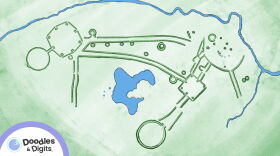 The 2,000-year-old earthworks will be featured in an episode of "Doodles and Digits: How It's Math" on PBS on September 22.
 -
 A federal agency is looking to change Section 106 of the National Historic Preservation Act of 1966. The 60-year-old rules require federal agencies to consult on recognized historic sites and avoid disturbances to these locations.
 -
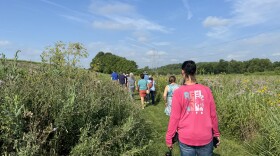 The group of Eastern Shawnee citizens made stops in sacred and historic sites across their homelands in the Midwest.
 -
 The event at the state park in Xenia fueled conversations between curious Ohio residents and citizens from two of the three federally recognized Shawnee tribal nations.
 -
 Miami University will close its exhibition of Culture Crops on June 13 before it reopens at Northern Kentucky University in October.
 -
 American Indian-led nonprofit Caesar’s Ford Theatre will premiere its film “Stomping Freedom” at the Little Art Theatre in Yellow Springs on May 27. The film was funded in part by the America 250-Ohio Commission to recognize America’s 250th anniversary.
 -
 The 8(a) Business Development Program housed under the Small Business Administration helps American Indian and Alaska Native tribal firms win defense contracts. Some of those contracts support mission-critical services at Ohio's Wright-Patterson Air Force Base.
 -
 The exhibit features 300-year-old painted hide robes that the Myaamia Center’s been studying with the Peoria (Peewaalia) Tribe of Indians of Oklahoma for the past five years.
 -
 The artists hail from the Seneca-Cayuga Tribe, the Miami Tribe of Oklahoma, and the Eastern Shawnee Tribe of Oklahoma. The exhibit "Ohi:yo’: We’re Still Here" is available to view at the Bryn Du Mansion in Granville until Nov. 26.
 -
 In 1843, the Wyandot tribe was forced to leave Ohio. They had to walk 150 miles from Upper Sandusky to Cincinnati, leaving behind all they built in the Sandusky River Valley.


