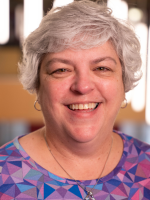
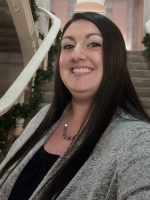
Sarah Metcalf fell in love with truck driving as a little girl, and it quickly became her dream. But after her conviction, she worried she might lose that dream — and her commercial driver's license (CDL). Then she learned her conviction didn't have to stand in her way. She could still drive, work and build a new life.
Today, driving means more to Sarah than just a job. It gives her a sense of freedom, purpose and the opportunity to leave her past behind.
This transcript has been lightly edited for length and clarity.
Courtney Alspaugh: So, the day that you were released, what stands out most about that day to you?
Sara Metcalf: Ha ha, the smell of clean air. When people say it smells different outside of those walls, I'm like, how? It's like we're still outside, but there's a difference. And I think it's the mindset of, I don't have to go back into my room and lock down anymore. And you appreciate the smaller things just a little bit more.
Alspaugh: Definitely don't take them for granted if we don't. So, you said that you were a truck driver before you were incarcerated.
Metcalf: I was one of the outlaw truckers. I had three logbooks and all that jazz, skipping scales and everything.
Alspaugh: How did you know that you wanted to be a truck driver?
Metcalf: I grew up; my mom was a sworn-in dispatcher and police officer for the Troy Dispatch before the 911 center came. She eventually quit that and went into trucking. She used to pick me up and drop me off in the semi all the time, and I thought it was really cool. I fell in love with it.
Driving a truck is a pretty unique experience as far as jobs go. You're alone most of the time. You're off doing things, going to the next place to pick up your next load and dropping off whatever you're doing for the company. And you're not focusing on the old places, old people, old things.
Also, when I learned that convicted felons could obtain their CDL and get jobs with no problem, it kick-started my obsession with trucking all over again. And I had a writing class when I was in there, and every writing prompt that she gave us was about truck driving and how I wanted to help people get into truck driving because I really think that truck driving is an answer. I don't think it's the answer, but I do think it is an answer to get people away from those old people, places and things.
My story is addiction. A lot of people have that story. And one of the things that you learn in AA and NA is kicking those old people, places and things out of the picture. Truck driving will take you out of that real quick.
Alspaugh: What does freedom mean to you today?
Metcalf: Everything, really. Don't let the system beat you down and make you believe that you can't be a successful person. Make your own story.
Support for ReEntry Stories comes from Sinclair Community College and LION. The series is produced at the Eichelberger Center for Community Voices at WYSO.