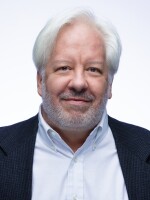
The University of Dayton’s next president — Darlene Weaver — will be the first woman to lead the school in its 176 year history.
She’s currently UD’s provost and executive vice president of academic affairs. Weaver recently spoke with WYSO’s Jerry Kenney and said, while she didn’t start out to serve as an administrator, she learned that her passion for education would be an asset.
This interview has been edited for length and clarity.
Weaver: I was a creative and professional writing major as an undergrad, a Pell grant recipient who relied on that assistance from the federal government and scholarships and so forth to get through college. I went to graduate school and studied ethics, and then landed a position at Georgetown University as a faculty member. So all of my career has been in Catholic higher education. But I worked my way from the ranks of a visiting professor to a tenured position, to full professor with growing administrative responsibilities along the way. I was, before Dayton, at Duquesne University, where I was an associate provost for academic affairs.
Kenney: And tell me a little bit about what you're passionate about, what appealed to you about that journey.
Weaver: Well, I became a faculty member because I developed a passion for scholarship and a love for engagement around ideas and dialog with others. And as a faculty number, I couldn't believe that I could get paid, right? That I could make a living talking with students about some of the most important questions that they have as human beings, because that's what ethics involves. You know, I was asked to take on administrative responsibilities, so it was not an aspiration of mine. And frankly, as experientially a first gen student, I didn't understand really what academic leadership looked like or meant anyway. But my responsibilities grew as I demonstrated effectiveness in the roles. And I came to really appreciate the generativity of administrative work. It's intellectually satisfying because you get to tackle complex problems and you get to do that in collaboration with others who have areas of expertise and competence beyond your own. So, for me, administration has come to be a way to serve a mission that I believe in, and to do that in partnership with others in a way that can have a visible, but also enduring, impact on other human beings.
Kenney: What drew you to UD?
Weaver: I knew of UD before I got here. As a faculty member, I had colleagues in the field who were faculty here, some of whom are still here, and I was always struck by how well they spoke about UD and how well they represented UD. As a parent, I visited UD with my son and was blown away by what the university had to offer. And then as an associate provost at my prior institution, UD was on my radar, and I watched and was impressed by a couple of things that I saw. First of all, just general excellence, but also the really thoughtful way the university goes about being an anchor institution in the community. And then the clarity and courage around its core value commitments, in terms of creating and valuing a diverse and inclusive academic community.

Kenney: As president-elect, how are you spending your days?
Weaver: It's been a blur. The last couple of weeks, we went right from the announcement into a full board meeting for a couple of days and then I was out on the West Coast meeting with alumni and donors, and then came back for a few days of meetings with volunteers and alumni leaders here on campus. So it's really just this week that I'm coming up for some air. We are working through some transition logistics in terms of things that I'm handing off to our interim provost, also beginning to map out transition priorities and engagement, both with internal stakeholders and external stakeholders.
Kenney: And how do you see the transition happening?
Weaver: Well, first of all, I'm so fortunate to be working alongside (current UD President) Eric Spina. I mean, you couldn't ask for a more supportive and solicitous predecessor, right? So I have great confidence that the work that we will do together over the next eight months will be genuinely collaborative and that we'll do that in a way that doesn't interrupt the momentum that the university has. At the same time, you know, I'll be really intentional about building relationships with colleagues who will become direct reports, with alumni and donors that I may not have met yet and also helping folks in the community understand the difference between being a provost and a president. We will be launching a search for the next provost, a national search for the next provost, very, very soon. We're already putting those pieces in place. And by the time we get to July 1, UD is already going to look different in a number of important ways. Changes in leadership, we're engaged in some strategic realignment of our academic enterprise, some restructuring in our schools. UDRI (University of Dayton Research Institute) will be a wholly owned subsidiary come Nov. 1 as well. We've got a new campus master plan that we're working on, new programs that will take effect. So I'm really excited about the building blocks that are already in place, and the opportunity to build on those strengths in order to steward the university into its next chapter.
Kenney: As you look at those building blocks, what do you see as some of the challenges moving forward? For instance, everybody is wrestling with AI and how to move into the future.
Weaver: Absolutely. And no one has a crystal ball either, right? So, you know, we don't know exactly how artificial intelligence is going to reshape higher-ed or the sectors, the workforce sectors that we serve. And then I would also point to the demographic cliff, which will extend through the year 2041. So the pressurized enrollment environment that we have isn't going to abate. It's going to be with us for a long time. I really see both of these sets of external forces as opportunities for UD. You know, on the one hand, we offer a stellar student experience, and I believe that the holistic approach to education that we provide is going to become all the more important in an AI-enabled world and, in point of fact, that holistic experience also is our selling point. It's our value proposition in a hyper competitive and compressed enrollment environment.
Kenney: Any other challenges or ideas of where you'd like to see, personally, the university go?
Weaver: You know, having worked at other universities, I bring, I think, a special perspective to UD. I see that what we are doing here prepares students who are easily two to three years ahead of their peers in terms of their readiness to move into the workforce and to lead from day one. So I'm excited to help tell that story more forcefully on a national stage. My experience tells me that UD is a leader, a national leader in Catholic higher education. And so one of the priorities going forward really will be to advance a reputational strategy that helps get that word out more effectively. I'm also excited to leverage some of the building blocks that we have here, like the development of the former fairgrounds at On Main. That is an asset that we can offer that most other universities in the country, they don't have anything like that, that they can bring to bear. And our distinctive residential learning environment, it's unparalleled in higher ed and it plays a really important role in the formation of our students that does contribute to what I said earlier about our students being ahead of their peers.
Kenney: You continue to become more involved in the University of Dayton community. How do you find the Dayton area in general and the Miami Valley?
Weaver: Oh my gosh, Dayton is a wonderful place to live. We've been here not quite three and a half years and we've loved getting involved. It's such a close-knit community and there's so much civic pride here that it's inspiring to step into a community that exhibits that. People are very, very welcoming. I have a son who's still in school, for example, and so we get to be part of the community, in terms of watching sporting events and things like that. I'm in a book club. It really has been a joyful experience to be welcomed with so much hospitality and enthusiasm into such a special place.