

Students shuffle into the bleachers at Fort Recovery Elementary and Middle School in Mercer County, just a few miles from the Indiana border.
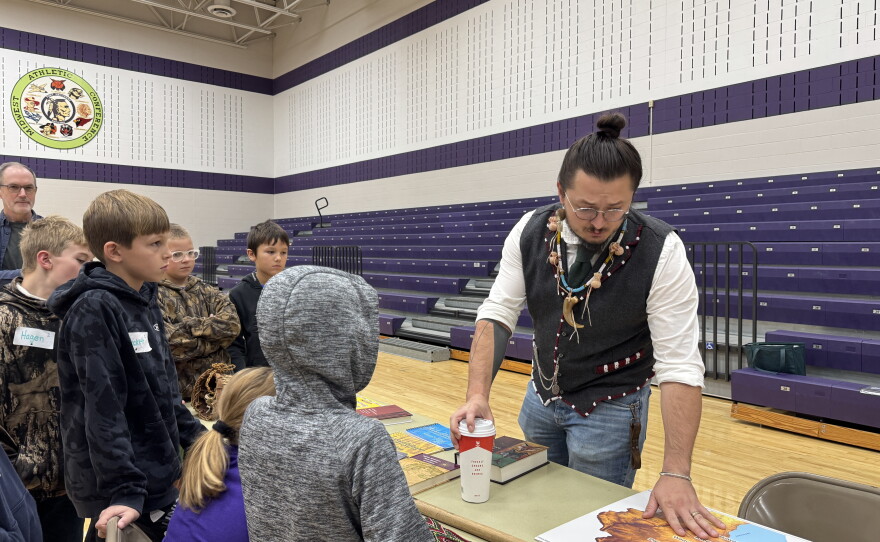
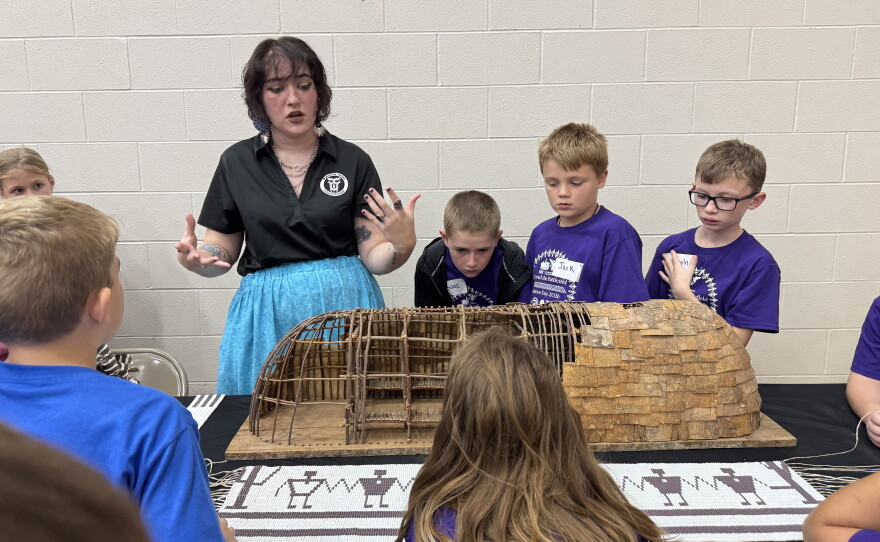
Eagerly their eyes peer around the auditorium, which is full of tables covered with Native American accessories, tools and craft-making materials.
The programming begins when Kim Rammel takes the microphone and speaks to the audience.
“We have a big day planned for you, and we hope you're as excited to learn some new things. Fort Recovery is the site of two Northwest Indian War battles that happened over 230 years ago, St. Clair's Defeat and the Battle of Fort Recovery,” said Rammel.
She’s the site manager for Fort Recovery State Museum, which is hosting today’s event.
In the gymnasium are more than 150 fourth graders from Fort Recovery and Marion Local Schools just 20 minutes down the road, and last week they put their books down to learn directly from citizens of Ohio’s historic tribes.
Joining them are 13 cultural interpreters from three tribal nations: the Miami Tribe of Oklahoma, the Eastern Shawnee Tribe of Oklahoma, and the Wyandotte Nation.
As Rammel explained, these tribal nations were victorious in St. Clair’s Defeat, the most successful defeat of the U.S. military by Native American troops.
“For the next hour or so, we will learn about the background of the Native nations who were victorious in St. Clair’s Defeat, simulate the strategy used in St. Clair’s Defeat by both the Native and American forces, and complete an activity that helps understand the Wyandotte removal from Ohio in 1843,” she said.
This event is called Beyond the Battlefield. This is the first time it’s come out to local schools. It’s inspired by one of the Museum’s permanent exhibits “St. Clair’s Defeat Revisited: A New View of the Conflict” that describes the aftermath for tribes involved in the battle today.
Though the tribes were victorious, all three were eventually forcibly removed from Ohio by the state and federal government by the 19th century. Despite their hardships, they’ve retained key parts of their cultures.
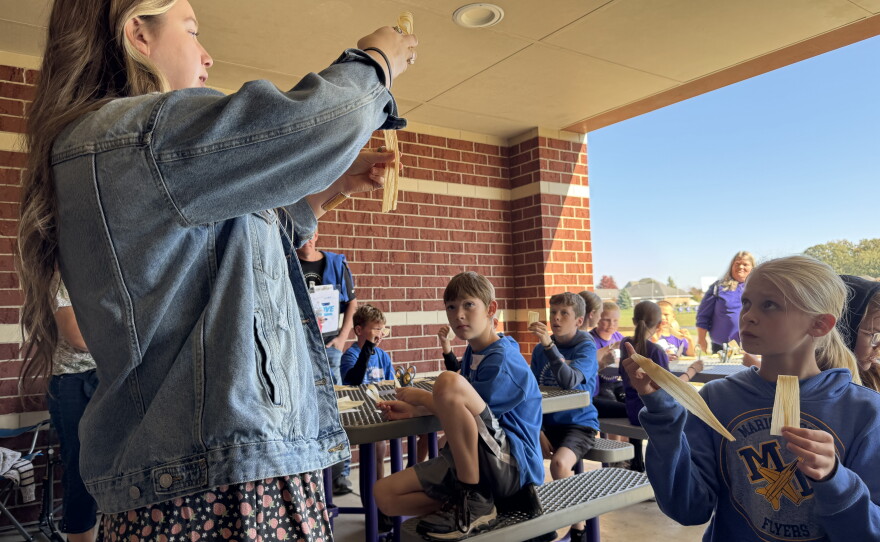
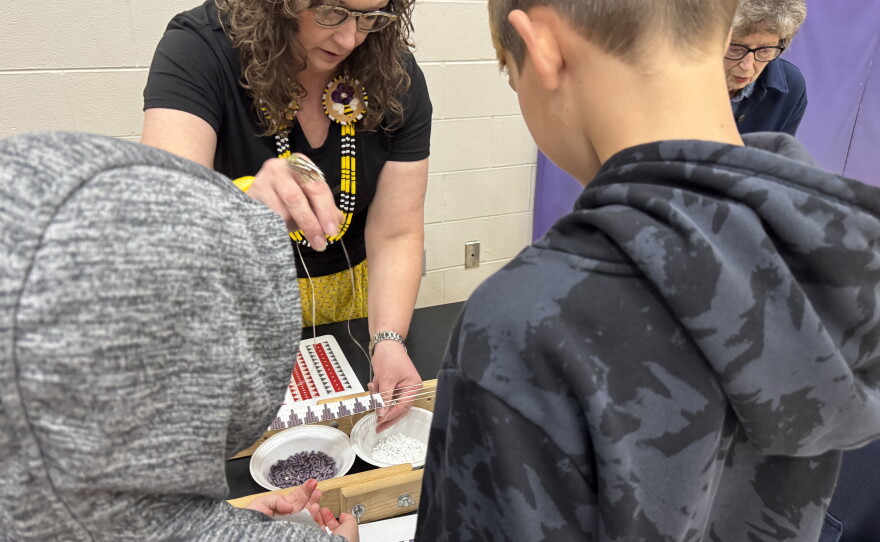
Throughout the school day students learned about corn processing, wampum belt beading, lacrosse and corn husk flower making, among other activities.
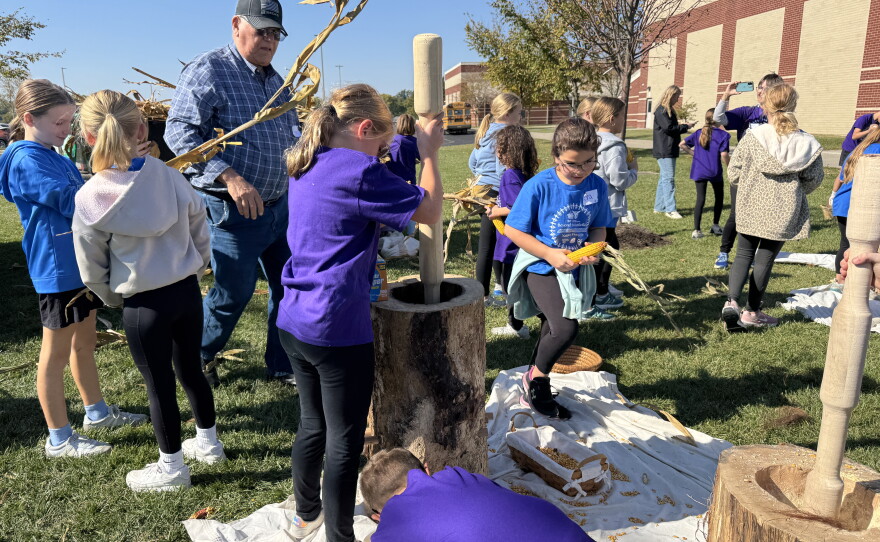
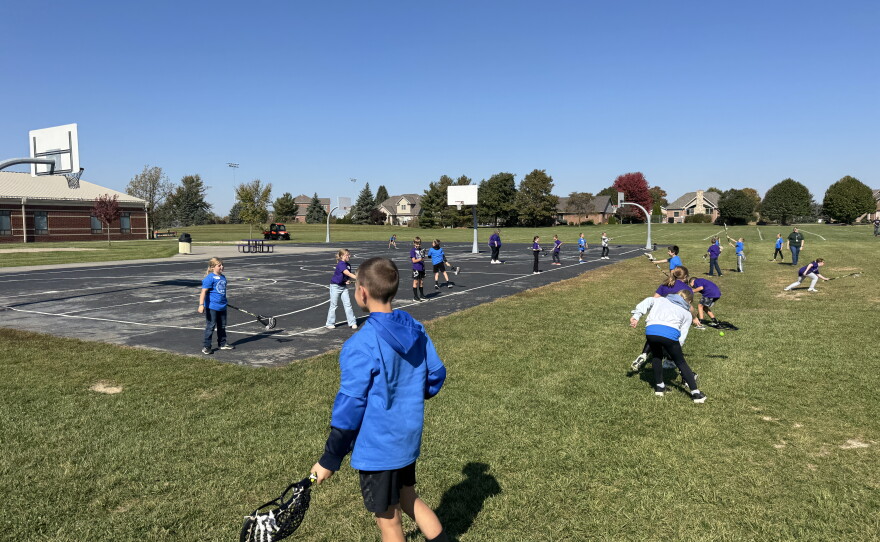
This is the third year Beyond the Battlefield has taken place.
The request to incorporate grade school education into this year’s event came from the Wyandotte Nation. The nation puts on similar programming at River Raisin National Battlefield Park in Monroe, Michigan.
Tribal historic preservation officer Josh Garcia of the Wyandotte Nation has taken part in that too.
“I think it's a great opportunity that we have here to have a positive reinforcement of how the Natives truly were and how we are today, and that we want that good, healthy and positive relationship with the people who still live here,” Garcia said.
Ohio fourth grade curriculum includes the state’s Native American history. Fort Recovery Elementary Principal Laura Brandt said this outing expands on what students read in class.
“I just think it's great for the kids in the area to get to learn about the history that happened here, their history of where they're growing up and to experience it firsthand,” Brandt said.
Nine-year-old Fort Recovery fourth grader Leigha Wilker said her favorite cultural station was the bead-making.
“...like the wampum belt, that was probably my favorite so far because I liked looking at all the stuff they made and how they make it,” she said.
Her mom Amanda Wilker, a chaperone on this trip, said she may have read about some of these tools or instruments, but it was different seeing them in person. She grew up in Coldwater.
“I guess I just never really appreciated it maybe when I was younger and now seeing this now that as an adult (I’m) more appreciative of it in a sense,” Wilker said.
“...they now get to really appreciate what they see just walking down the street or as we're driving by the forts here in town.”
They closed out the day with three different social dances.

Talon Silverhorn of the Eastern Shawnee Tribe said he appreciated the natural conversations he could have with the curious students.
“Sometimes it's their only exposure to it until they reach high school. And so I think it's really important for tribes to be a part of that education. I think it makes it more rich, but also I think it's probably the most valuable thing that we can be doing as educators,” Silverhorn said.
Fourth graders from Coldwater and St. Henry got to spend the next day with the tribal educators. The tribal nations involved hope the program will persist in the future.


