
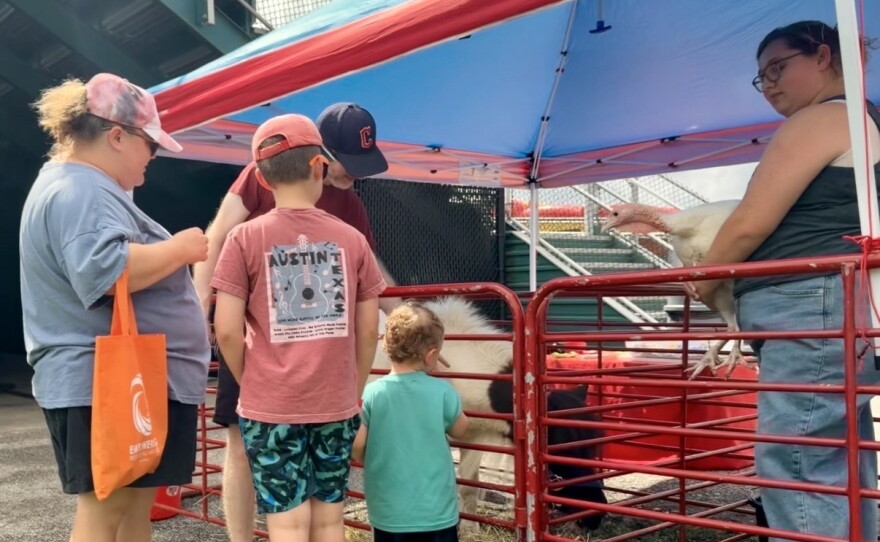
On a Sunday afternoon in Macedonia, two-year-old August Miller slowly approaches a petting zoo Turkey.
As it chirps, his caution quickly becomes curiosity.
“Oh,” he exclaimed, “did you hear that?”
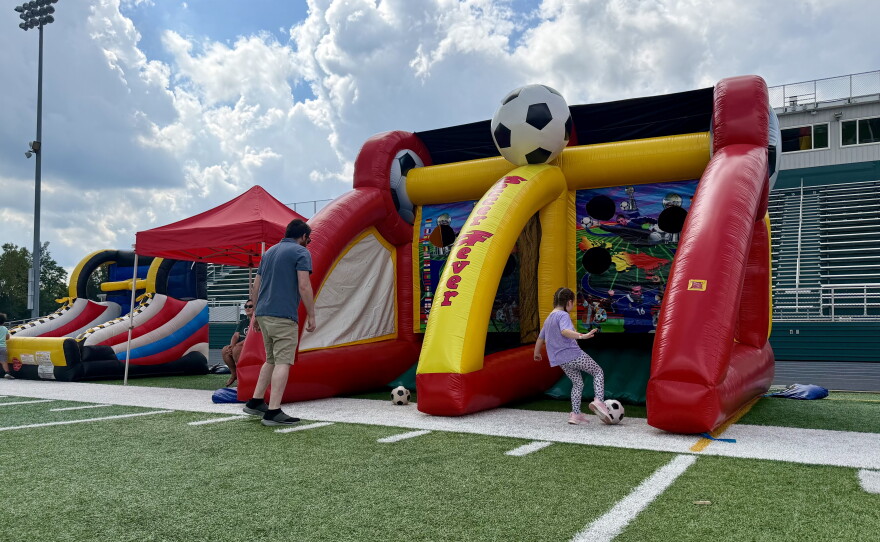
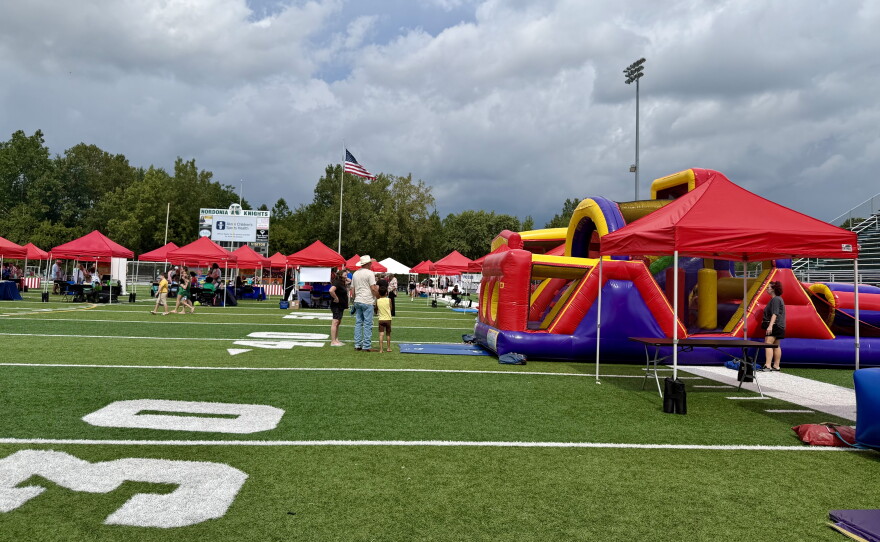
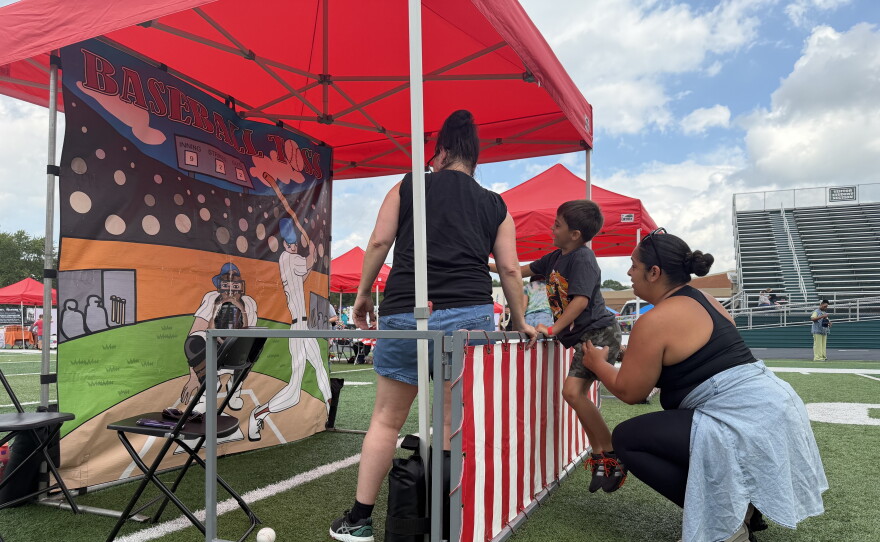
The petting zoo is one of many attractions that took over Nordonia’s high school football stadium for a carnival on Sunday.
Despite games, bouncy houses and food trucks, it was quieter than the usual carnival.
For August and his dad, Owen Miller, that’s part of the draw.
August is sensitive to loud noises. So, when his parents learned about the Positivity Spectrum’s ‘Quiet Carnival’, they were excited to find an event he could enjoy.
“They’re pretty hard to find,” Miller said. “Usually there’s too much noise and he’ll go and cover his ears immediately if it gets too loud.”
The Positivity Spectrum is a nonprofit supporting kids with autism and their families.
The organization’s founder, Sara Kovit Hanna, started the Quiet Carnival last year after she realized it was a summer tradition many families like hers were going without.
“I would get really frustrated when I would see sensory hours at carnivals and other events that didn’t feel accessible to my son,” she said.
For a child with sensory sensitivities, everyday features of the environment, like sounds, lights and smells, are often felt and processed more strongly.
Things like loud music, flashing lights, or a generator buzz can be overwhelming. So, Hanna decided to create a carnival without them.
“We do not have loud machines for any of our vendors,” she said. “Everything is spread out. Everyone is warned in advance that this is a quiet event and that the comfort of the sensory friendly folks who are coming is top of mind.”
The carnival also capped attendance to avoid crowds.
For kids who still needed a break, the Summit County Department of Disabilities created a space to rest on its mobile sensory bus. The vehicle, which is designed to help kids self-regulate, includes bean bags and tactile activities.
Communications Director Billie Jo David said there’s many considerations for making the carnival more inclusive, not just for kids on the spectrum, but anyone with a developmental disability.
“First is just physical accessibility, designing events in mind to make sure people of all mobility challenges can access an event,” she said. “Those are the types of things that make it challenging to access community events sometimes.”
This is Hanna’s second summer holding the carnival. This time, she said the event was bigger and took a year of planning.
Throughout the day, she handed off tickets to hundreds of visitors but still managed to greet most by name.
“I start to know every kid after a while,” she laughed.
Many families said that sense of community was just as important to them as the carnival’s accessibility.
Grandmother Kim Chapman says being around other families of autistic kids, she doesn’t have to worry about judgement.
“All the kids are kind of the same,” she said. “So, you’re not feeling like, if the kids run around or act crazy that anybody is gonna say anything or be annoyed. They can be themselves.”
