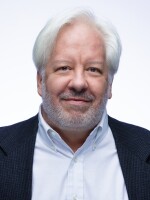
On Sept. 20, Dayton Daily News sports writer Dave Jablonski was playing an adult soccer league game when he collapsed on the Bexley High School athletic field near Columbus.
As team members, and several doctors, surrounded him, they could find no pulse. But thanks to a nearby Automated External Defibrillator — also known as an AED — they saved Jablonski’s life.
He recently shared his story with WYSO’s Jerry Kenney.
Jablonski: I was playing soccer in our 30 and over rec league in Bexley on the east side of Columbus. Games are at Beexly High School. I've been playing for the yellow team. We call ourselves the Bexley Bananas for two years. This was like our fourth or fifth game of the season. Played the whole first half, came off at halftime, was looking for my son. My eight-year-old son, Chase, was watching my phone in the stands.
I found him, I pointed him out to my parents who were both at the game, and I was walking back to the sideline and I had a brief moment of dizziness, just enough time to sit down, but very intense dizziness, and after that, it's just blackness. I woke up a couple of minutes later surrounded by people from my team, two of them were doctors.
And they told me what had happened. I had collapsed again. This time they had to shock me with the AED. They told me that right away.
My first reaction, I was ticked off that this had happened again, because it happened to me twice before.
Kenney: Yeah, let's talk about those incidents.
Jablonski: First time was on May 1 at an indoor soccer facility in Columbus, maybe one second of warning, again, very intense of dizziness, and I was on the ground, blacked out. This one time I was unconscious for three to four minutes, woke up surrounded by people. But I didn't have any pain, felt fine. They did take me to the hospital. I was there for two nights. They did a ton of tests on me. The verdict was that I was dehydrated. That caused the collapse because I ran 28 miles that week, I ran 10 miles the day before. Played 90 minutes of basketball the same day I was playing soccer. That was the theory at that point after all the testing.
So I went back to playing, second collapse was about six weeks later on June 5, same spot, same indoor soccer facility, the Resolute Complex. And this time I was up on my feet in less than a minute and I did not go to hospital. Teammate drove me home.
Kenney: Tom Archdeacon in his article on this mentions that you were very lucky by the people you were surrounded with that day. One of those was your father.
Jablonski: My dad was the first person to get to me. He's a retired ER doctor. He checked my pulse, found none. At that point, two doctor teammates, Chad and John, jumped into action. John had already scouted out where the AED was. He was ready. He ran to get it. Chad started CPR, chest compressions. Within minutes, they had got that AED on me. I think it just took one shock to bring me back. Immediately, when I woke up, they started asking me, do you know where you're at? Things like that to make sure my brain wasn't damaged.
Kenney: Those automated external defibrillators are having more of a presence throughout communities. I think this movement started a couple of years ago to make those more present. So you were very lucky to have one of those nearby.
Jablonski: Bexley installed them about three years ago after the DeMar Hamlin incident at the Bengals game. A man named Lee Nathan spearheaded the effort. I met him a couple of weeks ago after my episode. The one at Bexley High School's football field was maybe 50 feet from where I fell, but there are a number of others throughout Bexly at different locations. So yes, I was very lucky and very lucky that my teammates were there to save me.
Kenney: How are you doing today?
Jablonski: I'm good. None of these incidents causing me pain or discomfort. It wasn't like a typical heart attack where you're going to have some shortness of breath or chest pain. I woke up and if I had to, I'm sure I could have walked home. Nobody's going to let me do that. And the only pain in the hospital was from having an IV in my arm for five days. But then I had a defibrillator/pacemaker installed on my chest, which caused some pain and discomfort. I'm still recovering from that, but every day it's a little better, and sometimes I barely notice it. I have some restrictions on my arm movement with my left arm. Thank you. Lift anything more than 10 pounds for six weeks. Things like that, but not a big deal.
Otherwise I'm in great shape, doing a lot of walking, but I've really cut back on the workouts. I hope to get back to running, but I realize I'll probably never play soccer or basketball or any of those sprinting sports again. It's hard to imagine being able to do that. You know, the fixes they did for me, putting stents in my heart, I got four stents this time and three different arteries, not necessarily going to solve my problem.
There's still the danger of collapse if I was to go back to sprinting around at will like I do in these soccer games.
Kenney: How has all of this changed the way you approach or look at your own life?
Jablonski: Yeah, I have ups and downs, depressing that I won't get to play soccer and basketball again, if that is the case. I told my teammates I'm going to come back at 60 and just play because at that point, my kid will be out of high school. I'll have less to lose. I got to survive to at least 2037 so I can, I can make sure he's in good shape. He's the biggest reason I got a stick around, right? Um, yeah, it's pretty depressing at times, but I try not to dwell on it. So I'm definitely grateful to be here. Excited to be back at work and getting back to normal in that way. And, um. You know, I can still be around my teammates who are all my great friends these days. I just won't be able to play with them. So that's tough.
Kenney: You mentioned that you don't like to dwell on this, but you've been open about having conversations about your experience. Is there anything you want to comment on how your experience could help others?
Jablonski: Yeah, I think we decided, and my wife talked about it too, when I was still in the hospital that week, to turn something bad into good. You know, Anthony Grant, the Dayton Flyers basketball coach, has done that with his annual charity basketball game for mental health, which I've written about a ton of times, and I'm sure that was in the back of my head when I decided to tell my story. You know we can spread the awareness of the importance of AEDs if that helps just one more AED get put into place it's worth it. And CPR training, I'm going to go to AED, CPR training. Next month they have free sessions in Bexley.
So if we inspire a couple of people to do that, it's a good thing.
The National Emergency AED + Resource Registry App from the PulsePoint Foundation can tell you where AEDs are located in your community, and provide other health resources.