


We have many regional aviation legends around here. Sure, the Wrights started it all, but other flying entrepreneurs have also left behind legacies and familiar company names.
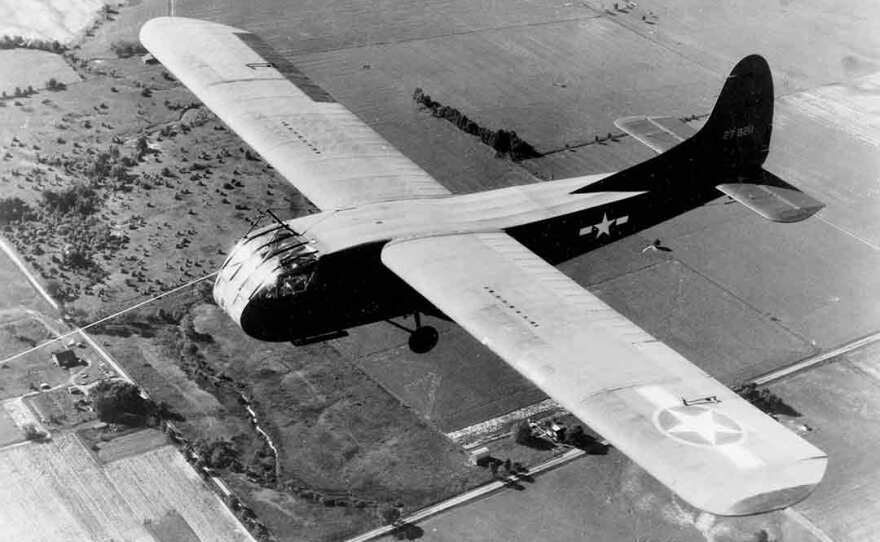
The WACO Airplane Co. in Troy is one of those. Famous for their sturdy and reliable biplanes, they also designed an assault glider that was used in every combat theater around the world.
After the war ended, the fate of the now-surplus gliders became a legend, too.
An army favorite
The WACO glider found favor with the Army. It was adaptable for many uses. It could carry 13 troops and their equipment. Without the troops, it could carry a Jeep, a 75 mm howitzer or a quarter-ton trailer. It was made of wood and metal tubing covered with fabric.
A total of 13,909 were delivered.
Even though WACO was the source of the total built, they only made around 1,000 of them. Ford Motor Co. built more than 4,000. That was all about assembly-line capacity. Gibson Refrigerator made around 1,000, and other companies fulfilled the Army's orders.

There was always a bit of confusion about the proper identification of the glider. It is always a WACO. Many were assumed to be Fords, Gibsons or some other manufacturer's product.
The setup for troops was a wooden bench along the length of the fuselage. The pilot and co-pilot sat in front. The entire nose of the glider could be raised for quick loading and unloading. A glider troop survivor described flying in the WACO glider as being like the inside of a huge drum. The fabric covering would beat in the slipstream.
The gliders were towed by cargo aircraft as well as four-engine bombers. The tow rope was connected to the glider with a huge knuckle-like connector tab at the top of the front windshield. A glider pilot survivor made the point that the release from the tow rope was always made by the glider pilot. Otherwise, the connector from the tow plane would come hurtling through the glider at flight speed. Imagine the results of that!
The WACO CG-4 flew assault troops for the first time during the invasion of Sicily in 1943. It also flew as part of the D-Day invasion, in the Netherlands and in the China-Burma-India theater.
A Shelby County farm field filled with stacks of shipping boxes
The Army's orders were filled and delivered as fast as production allowed. The orders were made based on the fact that no one really knew how long the war would go on. There were sayings going around: "The Golden Gate in '48" or "It'll be fine in '49."
The war in Europe ended in May 1945 and in the Pacific in September 1945. Suddenly, the Army did not need or even want the gliders that had been completed and packed into large wooden shipping boxes. The U.S. government said, "Well, that's your problem now."
They were declared surplus and sold off.
WACO had a big problem.
Fortunately, the U.S. was quickly becoming a country not at war. In the postwar period, the time-honored phrase about swords being beaten into plowshares was more like bombers becoming Revere Ware.
So the company announced there would be an auction of surplus gliders.
A farm field near Sidney was filled with stacks of shipping boxes. One complete glider was shipped in five boxes. These measured roughly 24 to 28 feet long, 8 to 10 feet wide and 5 to 7 feet high. These heavy crates contained around 15,000 board feet of lumber and accounted for about $3,900 in material costs.
According to some folks who were there, the scene was kind of amazing. The gliders were being sold for pennies on the dollar, $50 to $150.

Boxes into houses
The shipping crates were opened, and the glider parts were strewn all over. The unique wings, rudders, fuselage parts and cockpit instruments were left in the mud, while the boxes containing the high-quality lumber everyone wanted were hauled away.
The Army had demanded high-quality shipping boxes that could withstand overseas transport, and now the postwar economy was all about building new houses, new factories and new farm buildings.
The WACO boxes became the new houses and everything else the U.S. was demanding.
Many decades later, there was an effort to see what was left in the mud, and that turned up some recognizable glider sections. Some farm buildings in the area had a wing or tail section incorporated into the walls.
Sort of gliders into corn cribs.
For WYSO, this is Dan Patterson wishing you blue skies and tailwinds.
Blue Skies & Tailwinds is sponsored by Sinclair Community College and produced at the Eichelberger Center for Community Voices at WYSO.
