

Farmers in and around Dayton might be relying on a less effective method of pollinator attraction.
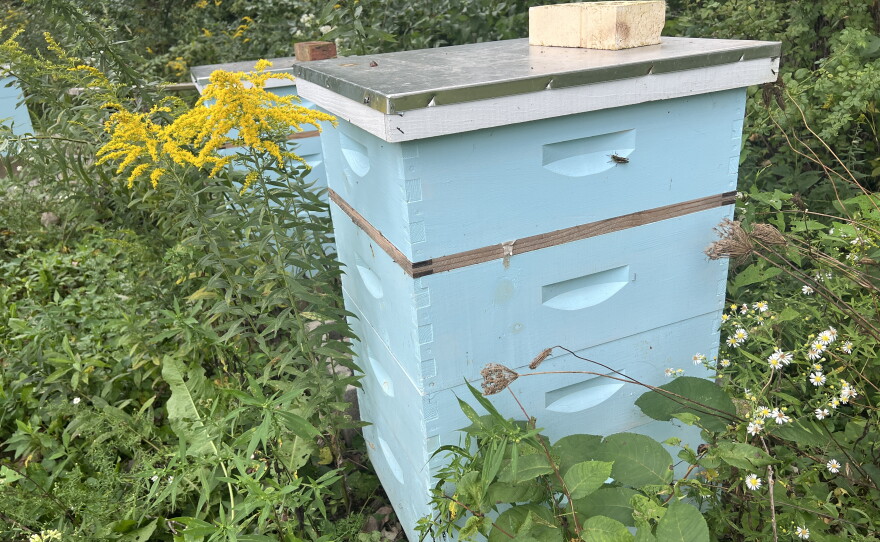
While having honeybee hives can help produce honey and keep purchased bees on a property, a study by the University of Dayton found that it does not attract other bees.
The university conducted its study in 2023 on 18, privately-owned farms in the area, focusing on farmers in cities or the transitional areas between cities and rural territories.
"University of Dayton has close connections with a lot of urban farms in the area, including Mission of Mary and I'd always heard about them since being at the university," said Chelse Prather, an associate professor at UD who worked on the research. "Also at the University of Dayton, you're always hearing 'We should be doing research that serves the common good.' And so when I started thinking about what I could do in urban farms, it would be to see if the things that farmers are doing to attract bees actually work."
Prather said they scouted local farmers at farmers markets with the help of UD student Samantha Urquidez, who collaborated with sociologist Anya Galli-Robertson and undergrad students at the university.
The study took place from May through the end of July, analyzing methods of attraction and the number or variability of bee species that visited each farm.
To the team's surprise, having those homemade or pre-made hives was not nearly as effective as other natural attractors.
“When we are out in the field counting how many honeybees landed on flowers, having a honeybee on your property actually did not affect that," Prather said. "So that was pretty surprising to us.”
While those hives did not seem to attract new bees, Prather said it also did not have any negative effect on pollinator visits, contrary to other researchers findings.
"One good thing that we found related to that is in some studies, it's been shown that having honeybees on a property, because they're competing with the native bees, can decrease native bees, but we did not see that," she said. "So it didn't have a good effect. It didn't have a bad effect."
In reality, planting native plants was the most effective way to bring more bees to urban farms.
“As long as you have stable flowers that last throughout the entire growing season, then you're probably going to have a pretty good population of bees," she said.
Prather said farmers could also provide a water source, bee hotels and reduce their mowing or pesticide use to encourage higher bee visits.
After the research was completed, Urquidez sat down to compile each farms results.
“She prepared a report for each farm saying 'These are the bee species that were found on your farm, this is how abundant they were, and here are the things that you were either doing that worked or doing that were not working, and here's what might help even more,'" said Prather.


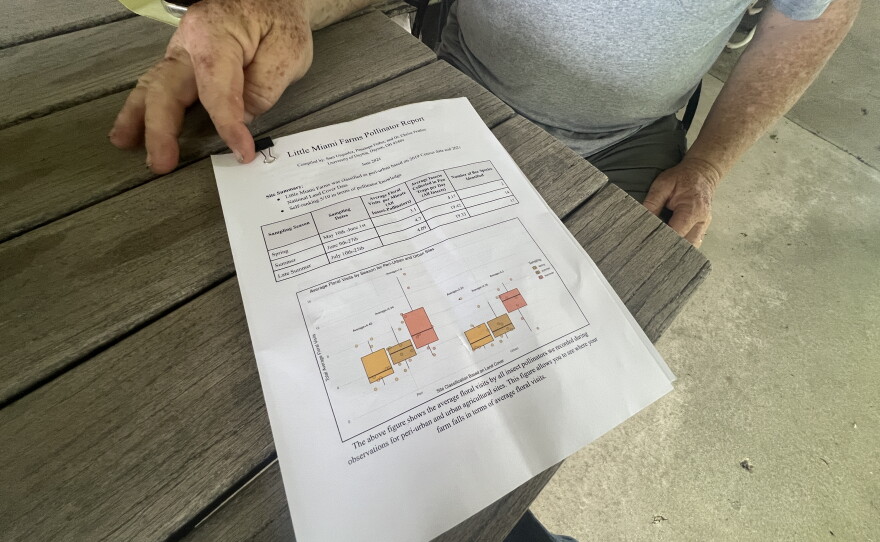
One of the farmers who dove into his results was Jamie Arthur at Little Miami Farms in Spring Valley, Ohio.
He said all of the biological and sociological information opened his eyes to not only the vast array of diverse pollinators in his area but also the impact that each season can have on them.
"They were bees, flies, wasps, different things that crawl around, and all of those that get in and out of the flowers are considered pollinators," he said. "She did these population surveys at different times of the year and then showed us what the diversity was in the spring and then in the summer and then she did one late summer or fall."
Arthur said he would be interested in participating in further research to learn more about pollinator behaviors in the later months of the year, including the hotter, drier period when flowers stop making nectar.
He said this information is especially valuable to farmers like him who do use beehives and grow thousands of pumpkins for wholesale buyers in the fall. That's because specialty crops tend to rely on pollinators.
"And so the more pollination you have, the more fruit set you'll have, the better the yield.”
