

Kettering Health has been growing its community garden in Dayton for three years now, working to address Northwest Dayton's food desert.
What started as a single plot near the hospital's Dayton campus has blossomed into eight individual, 1/8 of an acre plots in the neighborhood.
Each piece of land is being cultivated to address food insecurity among the area's residents.
"We have a food desert that's one of the largest in the United States. I thought we can do better," said Bruce Kidney, founder of Unity Garden. "I had many colleagues of mine at the hospital that were willing to participate in gardening and the hospital was readily willing to share some of the property that they had around the space so that we could cultivate that and make it into, turn place into space and produce some food."
Food insecurity has been on the rise across the nation and in Montgomery County in general.
Montgomery County Commissioner Judy Dodge said approximately 87,000 people in the county are food insecure. But she thinks this type of grassroots garden can help those community members find their next meal.
“They don't have to take a bus to go to the grocery store to get fresh fruits and vegetables. In time, it's going to be all right here," she said.
Giving Back to the Community
As a registered Nurse with Kettering Health, Kidney said he wanted to help his community beyond his work in the hospital.
So he started to build up Unity Garden to help fight hunger while providing enriching experiences for the neighborhood.
"The kids have been running off the bus for the last couple years, they jump off and toss their backpacks to the side and say, 'Mr. Bruce, Mr Bruce, how can I help? How can I help,'" he said. "They really love being in this space and recently they asked me when I'm not here anymore, can they take over the garden."
The garden thrives off of volunteers who grow and harvest fruits and vegetables from all over the world.

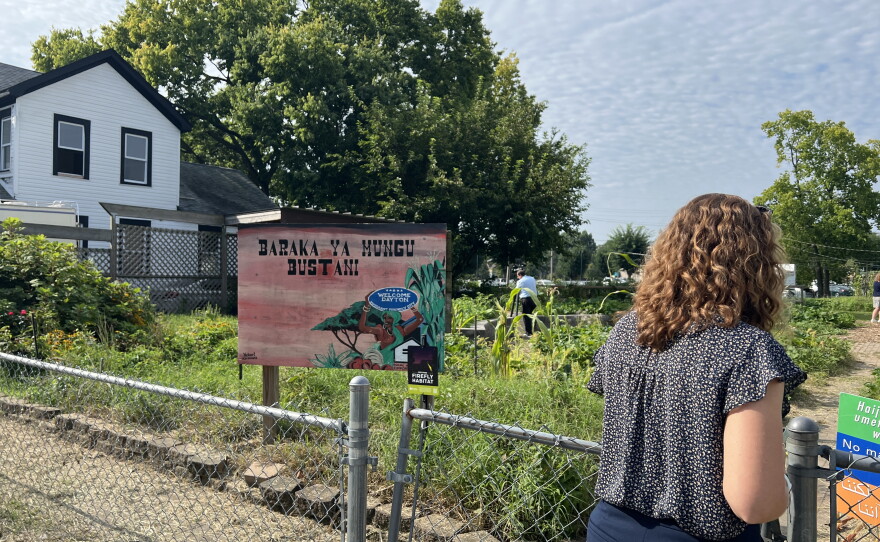
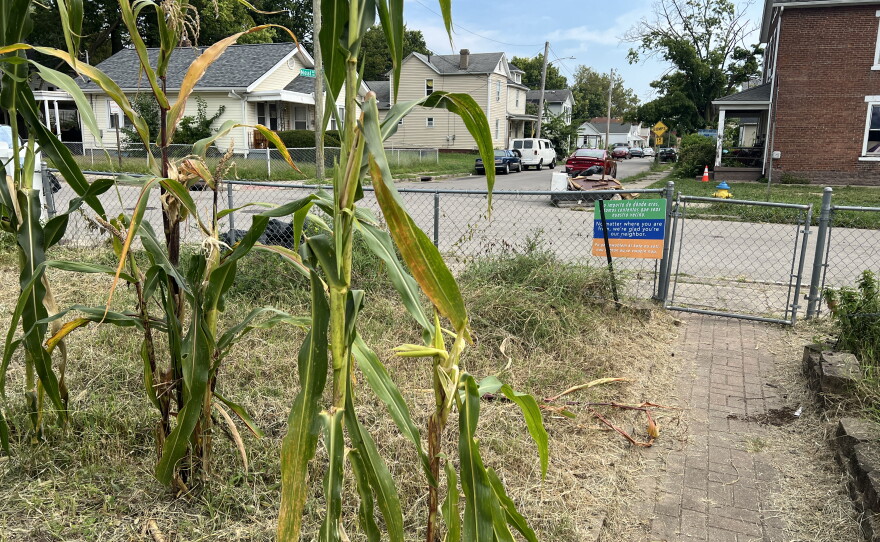

Those goods include foods popular with local immigrants, such as African eggplant, linga linga, njama njama and huckleberry.
"Everything that's grown here is grown mostly by the actual neighbors in the neighborhood or African refugees who have participated in growing this space," Kidney said.
Kidney said they would not have been able to expand over the years and serve those in need without support from groups like the Grandview Foundation.
“They stepped up in a very big way with a very, very big donation last year, $50,000 and another $15,000 this year," he said. "But that gave us the opportunity to apply for grants.”
Support for the garden does not end there.
Ashley Mack is the community initiatives manager for Montgomery County's Office of Strategic Initiatives. She said as a member of the Food Equity Coalition for Montgomery County, Kidney has been helping officials understand the importance of his work at Unity Garden.
"It's been really impactful for the Food Equity Coalition to understand work that's happening here and how we can replicate that or rather advocate for this type of community collectiveness across other parts of not just the city of Dayton but across Montgomery County, because that's truly what the Food Equity Coalition is about," she said.
Future Growth
As interest and engagement with the Unity Garden continues to flourish, Kidney said he hopes more community members become involved.
"It not only nourishes them and provides nutrition for their body but I think I also see it supports them mentally," he said. "To be able to step out their door and look out onto the garden and see a space that reminds them of home, to see vegetables that would have been growing in their backyard in Africa, it helps that transition out of their space that they were in Africa to here a little bit smoother."
Kidney said harvests often produce excess food that will soon be available for free to anyone through a small food pantry.
The pantry on Neal Avenue is expected to open in October with dry goods and other essentials for the neighborhood.
"We're looking at a potential partnership with the food bank to help launch and bring attention to that," Kidney said.
