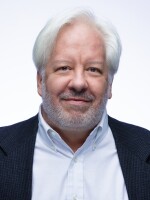
Nina Wiley, assistant vice president of student affairs at Clark State College, has been named the new board chair of Mercy Health-Springfield.
WYSO’S Jerry Kenney spoke with Wiley about the work she’s doing with the hospital board, and how her tenure has been going so far.
Wiley: It's been very rewarding. I intentionally try to place myself in positions within the community where I can uplift and serve different individuals and different populations. Access to education and health care are so important to help with the individuals in Clark County and thriving. And so I feel very privileged to be in that position.
Kenney: What led you to this type of work, certainly in the health care field, but there's an element of compassion for community that I can hear in your voice as well.
Wiley: Yeah, there sure is. I work very genuinely from a trauma-informed lens. And when I work with students or individuals in the community, it is from a place of genuine care. In my connections through Clark State, many students are impacted by barriers to basic needs, access to quality health care. And with me joining the board and working at Clark State, it seemed like a great position to be in to help with holistically serving students and our community to help move them forward and to help them and their families be sustainable.
Kenney: We're living in a brand-new age with AI technologies developing. Is that coming to play in the board's look into the future at all at this point?
Wiley: So I would say that AI is coming into play definitely with the hospital. And there are some ways in which AI is being implemented. Mostly we're seeing this in our procedural and imaging areas for overreads. And this really helps to ensure early and accurate diagnosis from imaging results. It speeds up the process. And then we are exploring ways in which we can enhance patient care using AI. And definitely looking for best practices and how we can improve that patient care.
Kenney: What about other future endeavors for the hospital? And that could be related to funding, employment, getting positions filled, and really just serving your overall mission to compliment or serve as many people as possible.
Wiley: Sure, so most recently we're always looking at how to improve our service lines, how to make enhancements. Most recently we opened the oncology infusion center in Urbana and that has happened very recently and that was converting a unit from the Macaulay Center in Urbana. And really a state-of-the-art facility. We've got infusion chairs and infusion suite and exam rooms, bringing those services to Urbana. So really proud of that. And then I would say also really spending time and energy trying to have more preventive medicine for our patients and our community members. And with that, it is providing greater access to care. Whether it's through the paramedicine program that provides after care, trying to reduce the number of emergency room visits. And also it's really important that we work to serve the entire patient. So even when they are discharged, do they have transportation? Are they having their basic needs met? Do they understand the follow-up for care? All of these things are so important.
Kenney: So you are serving as board chair for a two year term, but we should also mention that you are assistant vice president of student affairs still at Clark State College.
Wiley: I am. I've been at Clark State for 20 years.
Kenney: Yeah, talk a little bit about your position there.
Wiley: Yes, so I've been at Clark State for 20 years. I've been in this role for a couple of years, assistant vice president for student affairs, and what I tell folks is I'm a really good resource. I will tell you that our students are survivors, they persevere, they overcome challenges, and they come to us with so many different needs, but also so many different ways in which we can help them either align with a certificate or a degree. Moving them on to a bachelor's degree, putting them straight into the workforce, and all the while making sure that they have the resources they need for themselves and their family, whether it's academic resources, mental health resources, personal needs, to make sure that they are doing well in their classes, but also being their best selves in their program and when they graduate from Clark State and either go on to transfer degree or into the world of work.
Kenney: Finally, are there any other challenges ahead that you and the board are looking at or anything that you would like our listeners to know specifically about Mercy Health in Springfield?
Wiley: I think challenges are just trying to continue to implement best practices and trying to continue to build health literacy. It's confusing. It can be overwhelming, especially when individuals are sick or not feeling well. Trying to bring services to them in a way that fits what they need, that they understand, building that trust and relationships is huge.