Christmas carols have been written and sung, and enjoyed or even panned by listeners for centuries. And there's a rich history to the secular and non-secular carols and songs that have evolved in that time.
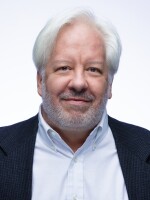
To get a Tiny Tim-sized taste of that history, we spoke with University of Dayton Professor Randall Wolfe, who teaches a class on the subject and is the author of a book called “Music of Christmas: Around the World, through the Centuries, and in American Popular Music."
This transcript has been lightly edited for clarity.
Randall Wolfe: Initially, carols were circle dances in the Middle Ages. They were secular or sacred music. They were not even necessarily Christmas music. And over the centuries, they became more and more known to be sacred music that might be performed in church, but not necessarily liturgical. So the music itself of a carol tends to be a little bit simpler in nature and used as the vernacular language of each country rather than the Latin of the ecclesiastical church.
So throughout the centuries, I think there's been this fluid movement back and forth, starting with St. Francis and his nativities, his live nativities in the cave back in the 1220s, I believe, where he had live animals and also sang carols, even at a mass.

So we go all the way to the 20th century where Bing Crosby starts recording carols and suddenly Silent Night becomes something that is heard in the secular world. He didn't want to record it at first. He thought it belonged in church. But his brother convinced him to give the proceeds to an orphanage in China to poor children there where he was already doing some work to help them raise money.
Jerry Kenney: Do you have any other favorite stories from your book about specific carols?
Wolfe: Some of my favorite carols to present to the class are those of the outlying countries on other continents. For example, there are some carols that actually have been composed in Antarctica with some scientists. Nick Starinski is a nuclear physicist who produced a song called Blues Before Christmas. He plays his guitar and the bluesy sound maybe reflects what it's like to be in Antarctica around Christmas time. There are also some examples of music played in outer space. The first piece, I think, it was played on Gemini VI by Wally Schirra and Thomas P. Stafford. They were playing harmonica and some bells that they had actually sneaked on board for their trip throughout the atmosphere, and they claimed to see some sort of vehicle flying from north to south in space and someone in a red suit flying it, and then they played jingle bells.
Kenney: There are carols that people associate with Christmas that aren't generally or specifically Christmas related.
Wolfe: Yes, in fact, Jingle Bells depicts going through the snow in a sleigh and was originally a Thanksgiving song. In fact, I think it was called the One-Horse Open Sleigh at first. There are other carols celebrated as Christmas carols, such as Winter Wonderland and Deck the Halls, which simply welcomed the season. In fact Deck the Halls was a Welsh New Year's Day carol, and a lot of people will put Ave Maria on recordings when they drop their recordings today, in their sets of Christmas songs. It really celebrates the Feast of the Annunciation of Mary in March, so there are quite a few carols that didn't start out as Christmas carols but are kind of accepted in that format today.
Kenney: Were there any big surprises that you learned in doing research for your book?
Wolfe: Yes, I think I spent more time researching the 12 Days of Christmas than any other carol. There is a Catholic tradition that the 12 Days represent different tenets of the Catholic faith during a time that England was suppressing the Catholic faith. I did a lot of research and finally came to the conclusion that that's probably not true, that the song was really traced back to a French song that was a counting song. It was a game for children to see if they could remember all the different components of the song. And it's okay that some of these songs take on religious meanings or secular meanings for sacred carols.
Kenney: I love this about your book, it looks like you've got 200 plus links to audio and video of some of the songs that you're talking about, correct?
Wolfe: Yes, there are 200 links, many of them on YouTube, and I've selected particular performers to try to have a complete range of different genres. I think our playlists in America tend to be maybe 50 carols on a given station, and there are at least 4,500 carols at a particular website, hymnsandcarolsofchristmas.com. I think it's important to get a feel for what Christmas is like around the world.