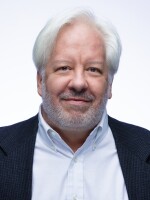
Olivia Green, was a 2025 fellow with the HBCU Radio Preservation Project.
The project, in collaboration with WYSO, is dedicated to honoring and preserving the vibrant history and cultural resources of Historically Black Colleges and University radio stations.
She spoke with WYSO's Jerry Kenney about her past year immersed in this work.
This transcript has been lightly edited for length and clarity.
Olivia Green: The HBCU Radio Preservation Project is a Mellon Grant funded project over the course of four years where we're working to preserve the voices and the memories and the physical audio materials that are coming out of public radio stations at HBCUs. And so as a project, we kind of have two sides of things. On one, the side that's connected to WYSO primarily is our oral history efforts. We go in, we make site visits at these radio stations, kind of establish relationships with the people on the ground and try to find who to best narrate the stories of these stations.
Sometimes we're lucky enough to be able to still have the very first students on air, sometimes they're still around and we get to talk to them about. What it was like to be at a station when it first started. We also love talking to current students that are there learning right now. But we also focus on managers and station engineers, community listeners, people that have been entrenched in the community and have felt the impact of the radio station. Over its lifetime.
And so as a fellow, I was primarily working alongside the oral history projects. But on the other side of things, we also partner with the Northeast Document Conservation Center. And their role is identifying the physical audio materials and the original programming that exists on the old reel-to-reels. And the DAT tapes and the cassettes and even CDs and making sure that those can be archived and digitized and given back to those stations so that they can use them and have them preserved.
Jerry Kenney: I know from experience with our archives at WYSO that it's unfortunate that many of the materials and media that could be archived have been lost over the years. So when you find material that is already and good to go for the archives, it really is just a meaningful treasure.
"And so I think I have this honor for memory, not as something fragile, but as something resilient, and as something that's necessary for us to contextualize and truly understand our history as individuals and as a collective."
Green: Oh, of course, especially because if you think about how, radio stations are running on the day-to-day basis, a lot of these stations are small, they don't necessarily have the people power to make sure that they're thinking with a preservation-first mindset. So a lot times, it's not intentional, but you just don't have the time and the people when you're trying to also maintain a production schedule and make sure there's things on air, right? And so what this project does is really serve as a resource more than anything to say 'okay we'll come in here and we'll do it for you for free, there's nothing that you have to do and we have people that are experts in this and they know where to look.'
And it's so interesting because if you look at some of the pictures that our project has taken of our process you'll see us — and the preservationist especially — they're going in the closets that haven't been opened in 20 years and finding keys to a filing cabinet that's lost and then you open it and oh my gosh, there's all this original programming in there.
I think once we get in there and people understand what we're looking for and why, when they get to hear it again for the first time, it's like, 'Oh yeah, we're sitting on so much.'
Kenney: That's got to be a tremendous benefit for the stations who, when they're looking at small budgets, don't have the funds to allocate toward archiving material when you've got to pay to keep the lights on.

Green: And that's something that we hear across a lot of the stations. Some of the stations are really small, maybe they have three full-time people. Some of them are a lot bigger and more well-resourced, but kind of across the board. A lot of what we get, both on the preservation side and on the oral history side is, 'Oh my gosh, you guys are right on time' or 'Oh my god, I've been wanting to do this thing but nobody thought it was important.'
And that's the thing too, I think once you are able to show people what they have, what they've been producing as an institution over the years, you also are letting the university and the wider community understand the value of the station in [and]of itself. Because we also know that in this era of digital and podcasts and stuff like that, sometimes terrestrial radio gets kind of pushed to the side, especially on a college campus where maybe students aren't necessarily as engaged with the station now as they would have been before. I think it's about re-illustrating not to the station itself but to administration even that like oh there's important stuff here and sosometimes it's nice like when we've worked with stations who have had anniversaries coming up and now all of a sudden, they have this all this programming from the 80s or programming from 90s that they can repurpose.
Kenney: What has your experience with the HBCU Radio Preservation Project done for you personally?
Green: I think there's so much, but the main thing that I always say is it's kind of felt like a 'refocusing' to me in the sense that I was really focused on doing hard news and stuff for a while, and I kind of enjoyed long-form storytelling and the reason that oral history was interesting to me was because I loved the interview process and the process of doing a long form interview. But I think it's refocused me in the sense that I have this newfound appreciation for memory work. And we talk about memory as being kind of this fragile thing that is not necessarily reliable all the time. You're not going to necessarily understand the exactly the who, what, when, where, and why of a situation when you're talking to somebody who's recalling something from 20 years ago, right? But what oral history does and what those interviews do is contextualize.
I always say, it's like the connective tissue of the archive. It's not the thing itself but it's how we understand why they're important. You understand how people felt in the moment, because people might not remember details, but people never really forget how something made them feel. And so a lot of the times in these interviews, you get people to talk about things that they haven't even thought about since it happened. And the catharsis that you see people have in those moments is definitely something that I don't take for granted. It's a two-way thing and it's like, 'Okay, we're having this memory exchange and experience together, and we're also creating meaning about a moment together. So I understand how you felt in this moment.' And then maybe we can go back and find the programming that happened on that day, the campus news that was happening. And even if the details aren't exactly the same, it's okay, I understand why you feel this way about this thing. And I understand, why you made the decisions that you made after you graduated, because of contextualizing the vibe, for lack of a better word, that you were existing in. And so I think I have this honor for memory, not as something fragile, but as something resilient, and as something that's necessary for us to contextualize and truly understand our history as individuals and as a collective.
Kenney: It goes back to that connectivity that you spoke about. Let me ask a final question, if I can ask. What's next for you?
Green: I'm actually staying on in a contract position as a digital storyteller with the project. We're in a space now where we're doing a lot more digital storytelling, not only with some of the archived materials but with oral histories. So for example we're working on a Black History Month series for WYSO, so I am helping cut down some of our interviews into little mini episodes about specifically Central State University in Wilberforce, which was actually, I think, the first HBCU radio station to get a license. So that's really special to have those local stories and to get to interact with that community more. So I'm doing that. I also freelance as a reporter. I'm based in New York City, and so I do a lot of public radio work here as well, and I also work in communications at a law firm. So I have a lot of things going on, but digital storytelling and audio storytelling is definitely heart-work for me. So, I'm happy to be able to continue my relationship with the project and with WYSO.