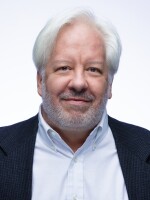
Maureen Fagans, executive director of United Senior Services of Clark County for the past 13 years, will retire in January.
Under her leadership, the organization has expanded while serving thousands of older adults through wellness, connection and education programs.
That includes more than 135,000 meals served to more than 2,000 seniors and 144 homes that received safety improvements, according to its annual report.
WYSO recently spoke to Fagans about her time in leadership as she prepares to retire.
This transcript has been lightly edited for length and clarity.
Maureen Fagans: 80% of our annual budget is spent on service delivery, which is important. That's the way it should be, providing whatever that service looks like for somebody to maintain their independence, and we're very proud of that.
And I think we're a really fiscally responsible organization. I think taxpayers are satisfied with how their dollars are being spent in the community, but it's also very important that this current generation, me included, that we help them to remain active and involved for as long as possible. And we believe that our centers and the activities that we offer help people to maintain or improve their health.
It's to everybody's benefit if we're successful at doing that so that people don't need those support services as early, or don't need to make a decision about moving into some kind of residential facility until it's absolutely necessary. That's a win for taxpayers. That's a win for families, it's a win for the person who wants to live that life that way.
My pastor calls it "the third 30," how we want to live the third 30 (years). So that's why we do what we do. And it's taking more of, it used to always be the back seat and we'd have this beautiful center that can help you, but it's becoming more important that we reach our older population and make certain that they take advantage of the exercise classes and the fitness room and the pools and engage in lifelong learning.
It's so important to age successfully.
Jerry Kenney: I think a lot of people are actively getting on board with that philosophy.
Fagans: Right. And I think this generation, the boomer generation, I mean, there's a whole lot of us and throughout our demographic who have influenced change, in a number of different ways through the years. And we're seeing that change manifest today for what it means to age successfully.
"Almost 10,000 people — so about a quarter of the older population that are eligible — find us and take advantage of what we offer."
We won't tolerate being degraded, we won't tolerate being discriminated against, and we have to advocate for ourselves. And there's a very large population that are willing to do that and willing to define what that looks like.
Kenney: How many people do you serve annually or however you want to quantify that?
Fagans: Last year we had 5,900 people who had registered and were using our centers on a regular basis. In addition to those 5,900, we also provided some level of service to another 4,300 out in the community, whether that was meals or transportation or some other kind of support service. Almost 10,000 people — so about a quarter of the older population that are eligible — find us and take advantage of what we offer. We're very proud that people do use us and are discovering us.
And we talk a lot about how to be best prepared to accommodate more. And it's grown every year. When I started in 2013, we counted about 1,200 members, so it's growing as is the population. It's a combination of having a facility that people want to use and want to be a part of, but it's also, we're a very large demographic.
Kenney: If you could, encapsulate how you feel about your tenure and your experience with United Senior Services, and maybe if you care to tell us what's next for you.
Fagens: I've been telling people that I'm leaving for five reasons. One is my mom, and then the other four are my grandchildren. None of them live near me, and I want to be able to spend more time with them. And so my husband's been retired for a couple of years and has really enjoyed it, and we want to travel, and we want to be able to see our family. So that's why, that's my reasons, and I've promised my family I'm not going to commit to doing anything other than home projects for the next six months. So there's been a couple of offers, but I want to experience what retirement looks and feels like before I consider a commitment anywhere else.
I would say that my biggest takeaway is that I've been a part of something really special and not everybody gets to experience that. This has been more than a job. It feels like a mission, and a calling. So it's been a very humbling and gratifying experience that I'm very grateful to have had for as long as I have.
Things are changing, too. When I started talking to my board last summer about retiring at the end of the year, the government hadn't been shut down yet. That wasn't part of any consideration, the movement to eliminate property taxes hadn't started to get any bandwidth. So I'm leaving the organization at a time where things are going to change and certainly change can be difficult for some people, but one of the benefits of my work has been an opportunity to meet national and state advocates who are involved in successful aging around the country and here in Ohio. And advocacy is becoming more and more important because things are changing — policies at the federal level and funding at the federal and state level, there's lots of changes afoot. So United Senior Services — and for many of your listeners, they're going to know us as Elderly United — we're just going to change with that so that we can continue to do what we do.