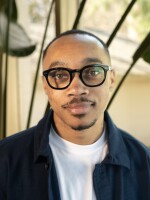
On this episode of Translucent, host Lee Wade speaks with Beck and Dash, co-hosts of the Queernecks podcast, about their mission to amplify queer Appalachian voices and reclaim the word "redneck" from its use as a slur. The conversation explores how Appalachia is stereotyped in mainstream media, why representation matters beyond trauma narratives, and how queer and trans people are leading grassroots activism throughout the region. Beck and Dash discuss using humor as a tool for building community and resistance, the history of class-based discrimination in America, and what they hope listeners—both inside and outside Appalachia—will take away from their work. This is a story about identity, resilience, and the power of authentic storytelling to bridge divides and challenge assumptions about who belongs where.
Wade: Hi, I'm Lee Wade, and this is Translucent. I'm so excited to welcome you to Season 2. The response to Season 1 was incredible. The downloads, the shares, the messages, the feedback -- all of it means more than I can say.
Wade: This season, I am going even deeper. Whether you've been listening since episode one, or you're just discovering Translucent now, I'm truly glad you're here. And today, I want you to meet two listeners who heard Translucent and felt moved to reach out: Beck and Dash, the two amazing people behind the podcast Queernecks. Their podcast is funny, heartfelt, and unapologetically real, digging into what it's like to be queer in Appalachia, while sharing stories, laughs, and insights that stick with you. They reached out to me last year and asked if we could be guests on each other's podcast. I absolutely said yes. Check this out.
Beck: I'm Beck and I go by she/her.
Dash: I'm Dash and I use he/him pronouns. Thanks for asking us to be here.
Wade: I've definitely been looking forward to having you two on. What inspired you to create Queernecks, and how did the idea first come together?
Dash: Inspiration, I think was, it came out of personal need. I was sitting around feeling lonely one day and those shared experiences had disappeared from my life. The word "Queernecks" just appeared in my mind and made me kind of laugh one day. As soon as it formed into something that I thought we should put on the air, Beck was the first person I thought of, the only person I thought of, who could make this project entertaining for people: intellectual and fun and caring all at the same time.
Beck: I'm also kind of removed from Appalachia and it's nice to go home sometimes. Physically, when you can't do that, it's nice to hang out with somebody like Dash.
Wade: Both Beck and Dash say people outside of the region often assume queer Appalachians don't exist or that they're desperate to leave.
Dash: People outside the region assume that they're either aren't queer Appalachians or that we all hate being Appalachian or we all our homes or something like that. And I'm well aware of the political landscape of where I'm from, but I also know that that's not the whole story. Appalachia also is a great role model in mutual aid models, in advocacy, coalitional intersectional activism. All anybody has to do is just take a quick glance at the work that's going on there at the grassroots level, and they will get a different image of Appalachia. And one thing that's very significant about that is that work is almost always led by queer and trans folks who are native to the region, people of color, indigenous folks. Those are the people who are at the center of that work in Appalachia. I think there's a totally different landscape that people aren't aware of, and I would love to bridge that gap.
Beck: I agree with Dash. The stereotypes about Appalachia are not very kind. There's a lot of ignorance and misunderstanding of the way that people are there. And I think people forget about that, about how diverse we are.
Wade: Humor plays a big role in how Beck and Dash push back against those stereotypes.
Beck: What I have found is that when you can make people laugh, they like you a lot, usually. That was always my strategy, get people to like me for who I am and then let them figure out I was queer. And then, oops, it's too late, you already like me. Ha ha.
Dash: No take-backsies.
Dash: I want people definitely to know that queer Appalachians are not self-hating queers and we're not self-hating Appalachians. We can love and appreciate both those pieces of our identity.
Wade: A huge thank you to Beck and Dash for stepping into this space with me. Be sure to check out their podcast, Queernecks, available on all podcasting platforms. I'm Lee Wade, and thank you for listening to Translucent.
This story was produced at the Eichelberger Center for Community Voices at WYSO. Translucent is made possible with support from The Rubi Girls Foundation and Square One Salon.