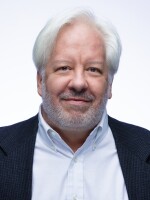
Jocelyn Robinson is the director of the Center for Radio Preservation & Archives at WYSO, and the HBCU Radio Preservation Project director.
In this excerpt from WYSO Weekend, she talked about the center and the wide swath of preservation efforts underway.
This transcript has been lightly edited for length and clarity.
Kenney: Jocelyn, that title alone tells me you've got a very full schedule, and so I'm glad that we have finally found time to get together to talk.
Robinson: I do have a full schedule. It's a lot of fun. I have the best job in the world.
Kenney: Let's talk a little bit about what you actually do. Some listeners may know that we do have a Radio preservation and archives department here at WYSO. Can you tell us more about it?
Robinson: Well, the Center for Radio Preservation and Archives is kind of an umbrella that has underneath it four main projects. One is the WYSO archives itself — all of the material that we have made since 1958 when we first went on the air to the present. And we also have something that we do with that material. We make content with it.
"People don't realize that radio is a primary source. And when it comes to the historical record, this is material that can really help us understand what has happened at a given time and place."
And that's Rediscovered Radio. We've got a broadcast series that we air from time to time. We've a podcast that we've produced using this material. And then we have the Yellow Springs Civil Rights Oral History Project, which actually has been around for some time. It was a community-generated project that WYSO eventually took under the umbrella of this center. And it looks at the stories of many of our elders in the community who were involved in the Civil Rights Era, back in the '60s and '70s primarily. And then the fourth element that's underneath that umbrella is the HBCU Radio Preservation Project. And what that is, is a model of radio preservation that is based on the work that we've done here at WYSO that focuses on the materials to be preserved at historically Black college radio stations. There are 30 of them, approximately, and their materials are very important to their campuses and to their communities. And so we are showing folks how to do what we've done here at WYSO.

Kenney: And that's quite an extensive undertaking. You've got people working in that department. We spoke with Olivia Green several weeks ago who started as a fellow with the center but now will continue her work.
Robinson: That's right. She is a contracted digital storyteller who is helping us really help spread the stories that we're uncovering through the work that the project is doing.
Kenney: Talk a little bit about the importance of this work.
Robinson: People don't realize that radio is a primary source. And when it comes to the historical record, this is material that can really help us understand what has happened at a given time and place. And it's still being produced. So with the many decades heritage that many stations have serving their communities, the preservation of this material really does help shine a light on everything that's gone on locally, nationally, internationally over time.

Kenney: The challenge of preserving past and current media can be daunting. How do you do this?
Robinson: One step at a time.
It is well known in archival circles that there is always a backlog. That's because we're making new content, new materials every day, no matter what the kind of archive you're looking at.
But particularly in something like radio, which is kind of a hybrid. So there was a lot of analog material that was created in the past. That analog material is deteriorating, and there's some urgency around its preservation.
But the other part of that is digital preservation. And the truth is that we create so much data in our day-to-day lives and certainly at radio stations that making sure that that material is preserved, that it's searchable, that you can find things, that you know where to look for things, all of that is similar to the analog side. But there's a whole other set of variables and conditions that you have to meet in the digital preservation arena.
Kenney: You mentioned Rediscovered Radio, which I'm always fascinated to hear what is in the WYSO archives and how you're recreating that content and re-presenting it to the public. We've been listening for the last several weeks to Legacy Listening sessions. Tell us about that.
Robinson: Well, Legacy Listening sessions, those are very important, because they are excerpts from the oral histories that are part of a very important part of the HBCU Radio Preservation Project. One of the things about radio materials, and it's also the case at WYSO, you don't record everything. Much of the material was created before the time when we would take pictures of our lattes and that sort of thing, that sort of documentation of our lives. That happens because of the digital devices that we carry around with us.
What we found was that we needed to have the stories of folks who were involved to really fill out a greater picture of what that station was like, what led to it being what it is today, how it served the community, and the kind of programming that took place. But also how those folks made their way to that radio station to become part of that legacy. So, legacy listening is really all about really telling that deeper, broader, richer story. The next episode of legacy listening is paying homage to Central State University's WCSU, the first HBCU radio station to receive an FCC license back in 1962.
And we're excited that this week, Black History Month, the episode will feature Dr. Morakinyo Kuti, who is the 10th president of Central State University. It's very exciting.
Kenney: This has to be very important for the HBCUs getting involved with this project who are just figuring out what they have as far as archival material. A lot of it has been lost over the years, unfortunately, just because of how radio stations operate. You've got to say "hey, we need that tape. We're gonna record over it for this program." And who knows what we've erased.
Robinson: But, you know, it's the same problem that WYSO has. And how we have responded to that really has helped to set up the model that we are presenting with the HBCU Radio Preservation Project. You can't keep everything. And certainly, as I said, there was a time when we didn't routinely document everything. We didn't record everything.
And it just so happens that WYSO has a much larger tape library from back in the '60s and '70s due to the diligence, and I think the understanding, on the part of Antioch students and our local volunteers who realized that what they were doing was important and that this was something that needed to be preserved.
"Our histories are important, and every one of us has a history that helps to explain who we are and what our role is in our community and our family and the world."
And so building off of their foundation that they created for us is really how WYSO's archive and The Center for Radio Preservation and Archives evolved. So being able to create models that can be adapted to other institutions, and in this case, HBCU radio stations, what we've done is we've created relationships that sometimes didn't exist by coming onto campus and introducing the radio station to their institutional archivist at their library. And in some cases, those relationships did exist, but in many cases, they didn't.
And the truth is, they have preservationists there on their campus who may or may not have a skill set in audiovisual preservation. And so we help to fill in some of those gaps by providing people power to help with some of the inventory and ultimately with digitization and reformatting of some of the analog materials that they have.

Kenney: It falls in line with kind of the, 'It takes a village' kind of philosophy of everybody coming together and community helping to continue or even create in some instances this legacy going forward.
Robinson: Absolutely. There are many, many partners involved in this project. One of them is the Margaret Walker Center at Jackson State University. That is the official repository for our oral histories. And they present a new oral history every Wednesday on their YouTube channel. So we share a lot of social media together, and also, it's really important to have that partnership with an HBCU that's doing preservation work and leading the way in that sense. And yeah, it is really exciting to see that work presented and to see it accessible to the public.
Kenney: Give your 30-60 second elevator speech on what this means to the average listener and why archival materials can be important in their lives.
Robinson: Our histories are important and every one of us has a history that helps to explain who we are and what our role is in our community and our family and the world. And we all can be archivists of our own materials and we can all control the narrative that exists around who we are, and this is material that helps us do that.
Kenney: Can we talk about the website coming up?
Robinson: Yes, we can. Very shortly, the HBCU Radio Preservation Project will be launching its website upon which there will be much celebration. You'll be able to learn more about each and every HBCUs radio station. You'll able to know more about our preservation practices and public history practices that we conduct in the project. You'll know about the folks who are the staff and all the different roles that are involved because there are many.
We're a team of about a dozen people doing all of this work and you'll be able to hear oral histories and see lots and lots of photos and also keep up with us. We do a fair amount of presenting at conferences and professional meetings, and we're very actively engaged and the website will be very rich and very dynamic