

The Fine Arts Garden in University Circle has long enjoyed a celestial reputation for views of the Cleveland Museum of Art across Wade Lagoon.
“It could be heaven,’’ the director of the Museum of Fine Arts Houston, Peter Marzio, said in Cleveland at a 2001 forum on art museum design. He also compared the view to sites in ancient Greece and Paris, The Plain Dealer reported.
Despite such praise, and despite its popularity with wedding photographers, the museum recognized nearly a decade ago that the garden sorely needed a reboot.
Monday, the museum will launch a multi-year, $40 million restoration, for which planning started in 2017. Nearly half of the 10-acre garden will be fenced off to prepare for two initial phases, identified as Scopes A and B, that will extend into 2027.
The initial phases will cost $24 million, for which $21 million has been raised so far, the museum said in a news release on Sunday. Funding is primarily philanthropic but includes $3 million from the state of Ohio.
The goal is to restore one of the city’s most beloved public spaces and to make it more accessible for wheelchair users by removing steps and lessening grades, but without making any dramatic changes.
“The biggest thing you're going to notice is how much more robust the future plantings are going to be,’’ said Matt Langan, an associate principal with Stimson, the landscape architecture studio based in Cambridge and Princeton, Massachusetts, that is leading the project.
“Of course,’’ he said, “it'll need a couple of years to really grow in.’’
Refreshing a masterpiece
The garden, which opened in 1928, was designed by Olmsted Bros., the successor to the landscape architecture firm founded by Frederick Law Olmsted, who co-designed New York’s Central Park.
The garden is part of the 63 acres donated to Cleveland in 1882 by Western Union co-founder Jeptha Wade as a public park amid what later became University Circle.
Wade’s son, Jeptha H. Wade II, followed up in 1891 by donating a previously withheld 3.75-acre parcel within the 63 acres as the site for the future art museum.
After the museum opened its original neoclassical building in 1916, much of the future garden area was a muddy eyesore according to museum research. The Cleveland Garden Club started raising money for a solution in the 1920s.
The garden frames a quarter-mile-long vista of the museum’s main facade looking north from Euclid Avenue across Wade Lagoon. The view is enlivened in the spring by blooms on cherry trees that flank the water.
From the Lagoon north, an area called the Mall extends uphill along two sandstone paths flanked by evergreen hedges and trees.
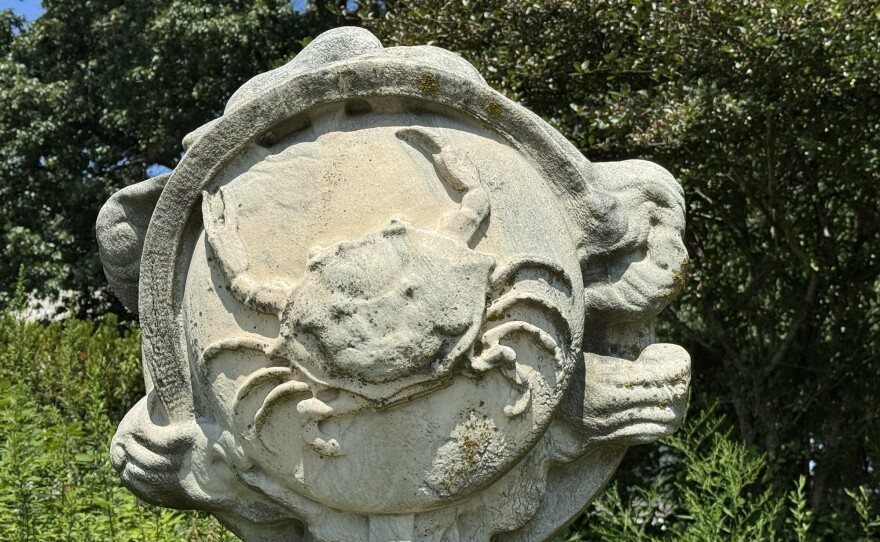
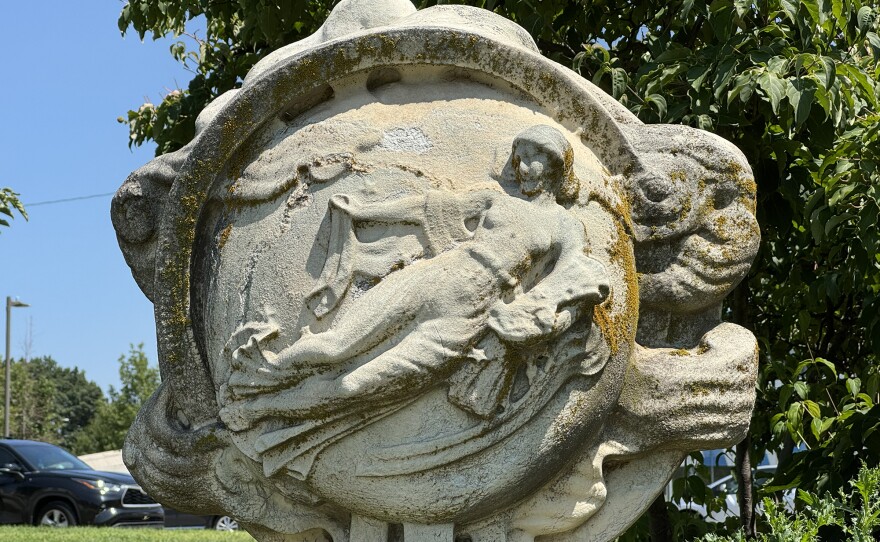
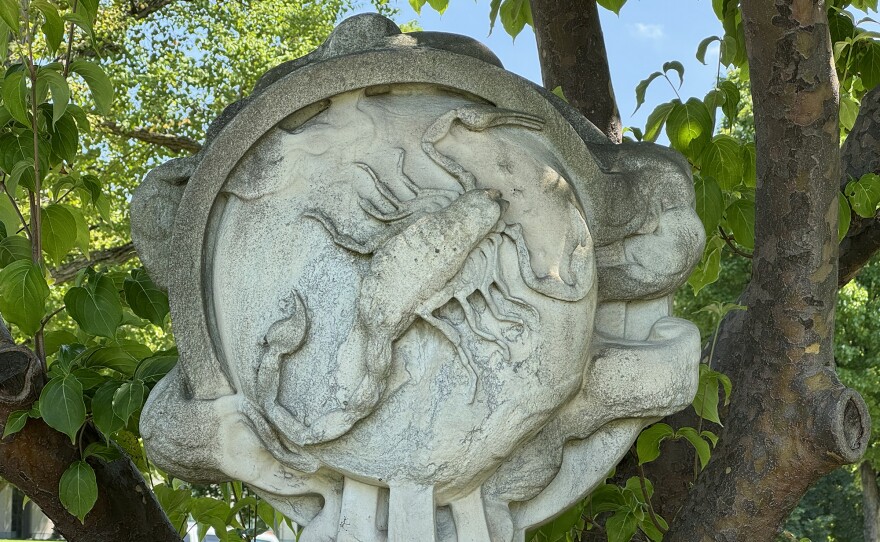
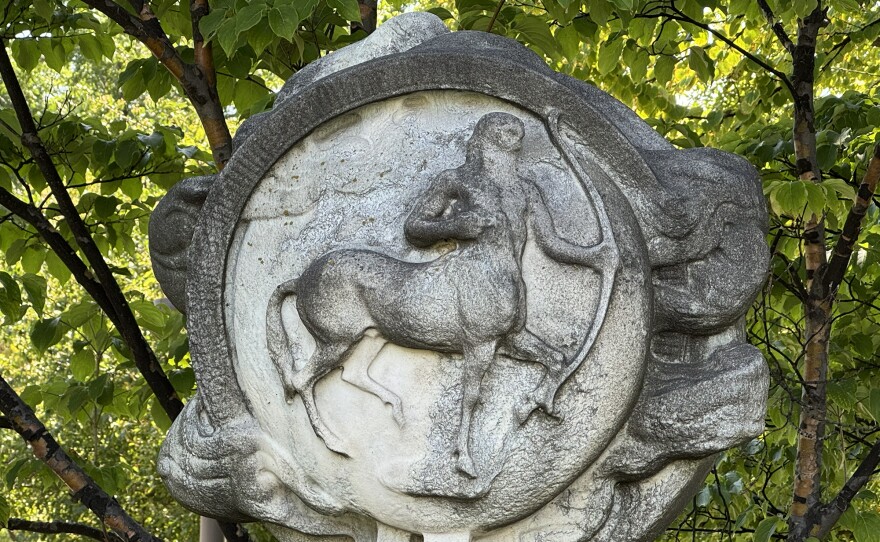
The hill crests at a level, stadium-shaped area called the Zodiac Garden, conceived by New York artist Chester Beach (1881-1956) as a showplace for allegorical sculptures. In addition to sculptures of signs of the zodiac, the centerpiece of the garden is the “Fountain of the Waters,” with human figures symbolizing the rivers that feed the Great Lakes.
Two large bronze statues located east and west of the fountain symbolize nature’s water cycle. They represent, respectively, “Earth Receiving the Rain,’’ and “Sun Drawing the Waters.’’
Early phases
The first phase of work in the garden, Scope A, will refresh plantings and replace sandstone paving on the Mall. The evergreen hedges flanking the Mall and the Zodiac Garden will be removed and replaced.
Some existing shade trees east and west of the Mall will remain, but a mix of other shade trees and understory trees will be planted. Many, but not all, will produce blooms.
Species will include catalpa, golden rain trees, tulip poplars, tupelos, swamp white oaks and maples. The understory trees will include serviceberries, redbuds, yellowwoods, dogwoods and silver bells.
Langan said the goal is to provide more blooms and color in warmer months as well as to create more color in the fall than the garden has had in recent decades.
“You'll get a lot of that color and texture back that has been lost over the years,’’ he said.
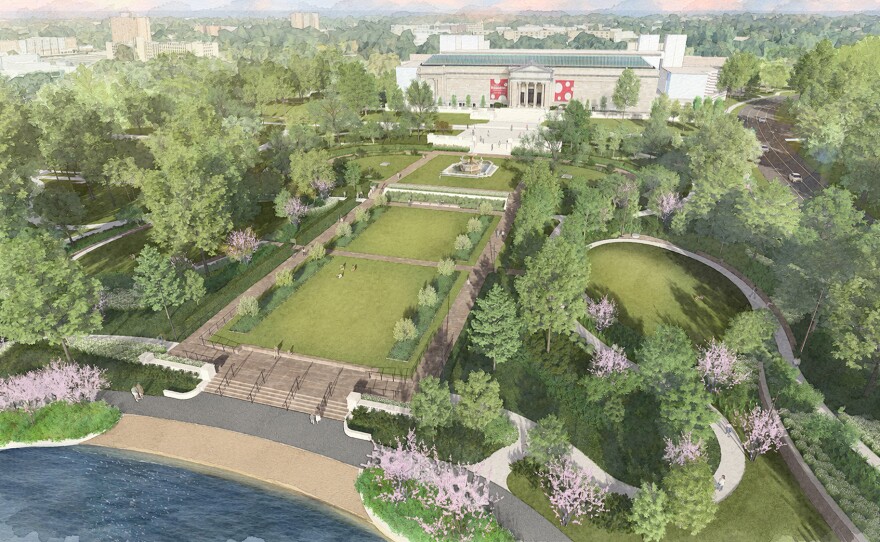
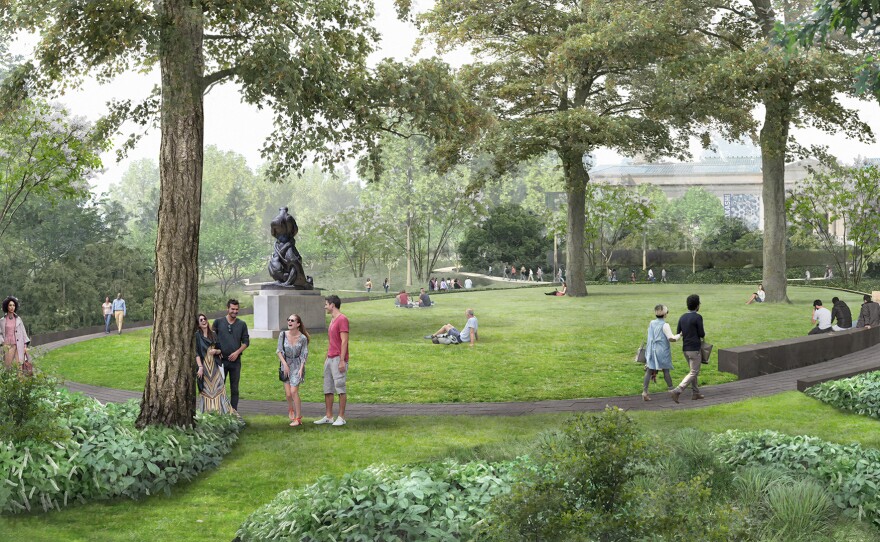
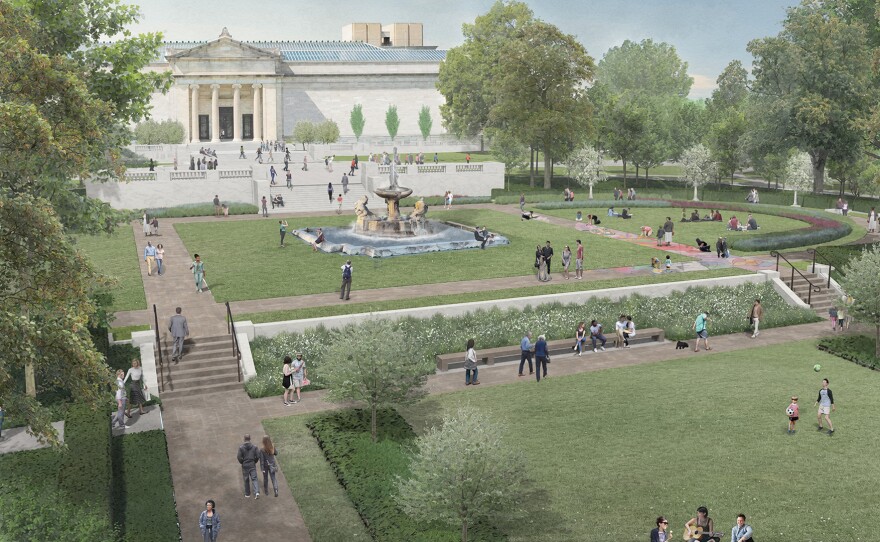

Wheelchair access and lighting will be improved. The garden technically closes after dark, but the museum recognizes that students, concertgoers at Severance Hall and others traverse the park at night.
“The new lighting will improve visibility throughout the landscape, help the garden feel more welcoming and secure, and highlight its trees, plantings, pathways and architecture after dark,’’ said Todd Mesek, the museum’s chief marketing officer.
Work on sculptures
Years of acid rain and freeze-thaw weather have left Chester Beach’s zodiac and fountain sculptures looking partially melted. The “Fountain of the Waters’’ has also been stained by algae, lichens and rust from water flowing through iron pipes.
The sculptures can’t be restored to their original, uneroded appearance, but the museum plans to clean and stabilize them with what it calls “a chemical consolidation for long term protection from weathering.’’ Old water lines will be replaced with PVC pipes.
The fountain’s concrete foundation has crumbled into the virtual consistency of sand and needs to be entirely replaced. The fountain itself will be disassembled, cleaned and treated offsite. WR Restoration of Twinsburg will do the heavy work. EverGreene Architectural Arts of New York will perform the cleaning and treatment, the museum said. The fountain’s pieces will then be reassembled atop the new foundation.
Scope B, which will begin after the first year of work, will involve routine cleaning and repointing the white Georgia marble facades of the museum’s 1916 building. It will also provide wheelchair access from the East Boulevard sidewalk to the museum’s East Terrace and South Terrace, where Auguste Rodin’s “Thinker’’ can be viewed.
Also, as part of the upcoming work, the museum will remove a highly visible group of diseased beech trees at the brow of the hill west of the Zodiac Garden, which overlooks the western portion of the Nord Family Greenway. They’ll likely be replaced with white oaks, Langan said.
The annual Chalk Festival, usually scheduled for September, will be replaced this year by the Chalk Party | Fiesta de Tiza, on Sunday, September 6, from 1 to 4 p.m., at the museum’s Community Arts Center, on Cleveland’s West Side.
In the future, the restored Fine Arts Garden will be capable of hosting the Chalk Festival and additional public events, said Jeffrey Strean, the museum’s former director of architecture and design, who is advising the institution on the Fine Arts Garden project.
Langan also said new areas for permanent displays of outdoor art may be possible.
Looking back, and ahead
The museum hasn’t ignored the Fine Arts Garden. It rehabbed the terraces outside the 1916 building in the early 2000s and rebuilt the Holden Terrace, a grand staircase descending from Euclid Avenue to Wade Lagoon, in 2020. Also in 2020, the museum added a new 7-acre park on the west side of Doan Brook to its portfolio of outdoor spaces.

Upcoming phases of the Fine Arts Garden renovation, labeled Scopes C, D and E on a map describing the projects, will include draining Wade Lagoon, rebuilding the retaining walls and walkways that surround it and refreshing the surrounding landscape. At that point, the existing cherry trees will be replaced, Langan said. The museum also hopes one day to create an outdoor dining area for its Provenance Restaurant.
Work at the lagoon will be coordinated with a Northeast Ohio Regional Sewer District proposal to dig a new culvert beneath the lagoon to accommodate storm water carried by Doan Brook.
The work in Scopes C, D and E hasn’t yet been scheduled or funded, but the work beginning next week will begin the long-needed rejuvenation of the Fine Arts Garden.
In the meantime, photographers and wedding parties who flock to the museum’s South Terrace in good weather will have to get creative about avoiding shots with construction fences around the Zodiac Garden. It’s the price of bringing at least part of the garden back to heavenly glory.
