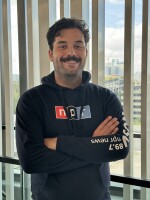
Editor's Note: John Holmes is the brother-in-law of WOSU's All Things Considered host Debbie Holmes.
A retired Immigration and Customs Enforcement agent is critical of ICE under President Donald Trump’s second term.
John Holmes worked at the Detroit Field Office covering Michigan and Ohio from when ICE and the Department of Homeland Security were first created in 2003 to 2014. Before that, Holmes worked in U.S. Customs Service.
ICE is facing criticism for its actions in Minneapolis and around the country. Agents shot and killed multiple U.S. citizens who were protesting and observing the agency as officers arrested undocumented immigrants in the city over the last month.
This interview was edited for clarity and length.
George Shillcock: I'm here with John Holmes, who is a former Immigration and Customs Enforcement agent who worked there until 2014 when he retired. John, thank you for joining us today.
John Holmes: Thanks for having me.
George Shillcock: John, can you describe what you did at Immigration and Customs Enforcement?
John Holmes: I was an assistant special agent in charge. And it typically meant that I was over several groups of agents conducting criminal investigations.
George Shillcock: And you worked in the Detroit Field Office, correct?
John Holmes: That is correct.
George Shillcock: I understand it today that the Detroit field office covers both the states of Michigan and Ohio. Was it always like that while you were there?
John Holmes: It was.
George Shillcock: When it comes to comparing the Detroit field office to other regions for ICE where they operate, is the workload much different than if they're working down near the southern border or if it's a state with a more direct border with Canada.
John Holmes: Yeah, well, you know, the southern border is a very busy border. So obviously, there's a lot more activity going on down there than at the northern border. But we stay busy with a variety of operations here. When I worked there, we went typically after the the most significant criminals, the ones that had committed acts of violence. And so that's who we focused on. Now, if we came across some other folks as well, yes, they might be picked up as well. But that wasn't our goal. Our goal was to get the most dangerous people off the streets.
George Shillcock: It's often cited that the U.S. deported the most undocumented immigrants under President Barack Obama. What was it like working during that time?
John Holmes: It was orderly. It was well thought out. I mean, we still went after the worst of the worst, and we still conducted the U.S. Customs investigations that we needed to conduct. So we were able to manage both of those and pick up a lot of people that needed to be sent out of the country.
George Shillcock: I wanted to get to how Immigration and Customs Enforcement has really changed since you retired. Do you get to talk with people back at the agency much anymore? Do you keep in touch? Do you get to hear about what's going on there now?
John Holmes: Every so often I do. Right now, it's just, I don't recognize it now. So it's out of control. They're tasked with an unrealistic goal. There's so many agencies that are participating now. It's hard to recognize the agency and I don't understand. Well, I guess I do understand. It's that the direction of the Trump administration, they want to pick up as many undocumented people as they can.
George Shillcock: And how do you view the immigration enforcement in this second term for President Donald Trump, especially these massive immigration operations that we've seen targeting Los Angeles, Chicago and Minneapolis?
John Holmes: It's got to change. They're at a boiling point right now. They need to reduce the number of agents in Minneapolis, go back to doing targeted operations. I think body cameras and masks, you know, removing the masks would help a lot. It really all stems from the president's directive. If the president wants to calm this thing down and hold agents accountable for their actions, all they have to do is make a phone call, and that can happen. And the training is only 47 days, which is not enough.
George Shillcock: Seeing what happened in Minneapolis where people were killed by ICE agents while they were either protesting or observing ICE, detaining people, what was that like for you having to see that happen?
John Holmes: It was horrific. I mean, I understand that this is not all of the ICE agents that are out there. But what I saw was horrific. It was like a gang of angry, angry agents with no lead, grabbing people off the streets, leaving cars in the middle of the streets, jumping in front of vehicles. I don't recognize this agency anymore. And (they) need to really change a lot of the things they're doing now, and I think they say pull back, reduce the number of agents, begin doing target operations, and hold the agents accountable for their actions.
George Shillcock: That's John Holmes, former Immigration and Customs Enforcement agent until 2014. Thanks for speaking with us, John.
John Holmes: You're quite welcome.