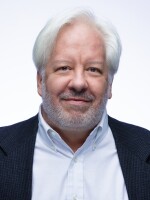
More than a million meals have been delivered to families across the U.S. who are fighting breast and gynecological cancer. The organization that has made the deliveries a part of its mission is Pink Ribbon Good. Heather Salazar is the CEO of the group and in this conversation with WYSO's Jerry Kenney, she talks more about the services they offer and her own story of how she got involved.
Heather Salazar: Our mission is that we provide meals for the entire family, house cleaning kits, rides to treatment, and peer support for all women and their families, battling breast and gynecological cancers regardless of socio-income status. We've been providing these services since 2012.
Jerry Kenney: And can you tell me a little bit about the genesis of the organization and how it started?
Salazar: So basically, I always say breast cancer came in my life in 2001. We met a young woman that was raised in the foster care system, battling breast cancer. She was nearing the end of her battle and looking for a home for her baby. Her baby was eight months old, super healthy and perfect when we met her, and my husband and I ended up adopting that baby at ten months old. She's now 21. How crazy is that? We spent the next year taking care of her mom, Alexis, getting her to treatment. It was different. It was really different taking care of someone that faces true health equity and under-insured under supported food, insecure. All of those things. It was, you know, even though I was very middle class and a young mom of four children at the time, it was very different, the things she went through.
“As an organization, we are 29% food insecure. So, that means that you don’t know what your next meal is coming from. We’re 27% ride insecure and you have no idea how to get the treatment and 54% of the people we serve are at the poverty line. People need help.”Pink Ribbon Good CEO, Heather Salazar
And so unfortunately, she passed a little bit after she turned 24, and it was still one of the hardest things that I've ever had to witness or go through. About a year later, my Lexy would finally stay with my parents. My husband and I went away for our anniversary. I did my first ever self-breast exam because Alexa said, 'Heather, young people get breast cancer.' And, you know, I didn't really believe her. She was the only young person I knew that ever had breast cancer. Everyone else I knew was my grandma's age, and I ended up finding a lump and I was diagnosed with the same kind of breast cancer as Lexie's mom. And I was so angry at the whole world. You know, fortunately for me, I was diagnosed with an early stage. It was very aggressive like Alexis's, but it was early stage. And, you know, she saved my life. I would have been, I was 31 years old, and I would have been dead before a mammogram.
Kenney: So you started this organization?
Salazar: It originally started before me was peer support based. And then back in the day when I promised I would write a grant to start these services, it took nine months to get if I were 23. So, we partnered with an organization in Cincinnati and then moved. When we got the grant, we moved the organization to Dayton, formed a board and started these services. So I think the 523 might actually be like 2003, but I wasn't involved and we didn't start serving these free services until 2012.

Kenney: And in that time now you have just hit a milestone. Can you tell us about that?
Salazar: Yes, I can't even believe it. So, we're in Dayton, Cincinnati, Columbus, St Louis area and San Francisco. And in June of this year, we served our one millionth meal. It is crazy to me. I can't believe that we started out serving in Dayton, Ohio, in Cincinnati, in the in Sam's bags, like we would have Sam’s, coolers, bags. And if you were my friend, I was begging you to drop these meals off. And then the need was so great and escalated. I mean, as an organization, we are 29% food insecure. So that means that you don't know where your next meal is coming from. We're 27%, ride insecure — you have no idea how to get to treatment. And 54% of the people we serve are at the poverty line. People need help. And cancer isn't biased or prejudiced or any of the things.
Kenney: So, as a nonprofit, you're facing, as many are, a lot of challenges these days. So, talk a little bit about that.
Salazar: Yeah, I mean, our meals this year are up 76%, and so, you know, figuring out how to consistently meet the demands and we've never, ever turned one person away. It's the most important thing to me that if you need our services and you're asking that we can serve you, and we are consistently figuring out how the community rallies around this and we're writing more grants, but our community is pretty powerful in how they come around and kind of like know exactly where the money goes. And if you see a pink truck or see a fundraiser or whatever, they know, oh, I provided 1000 meals with my donation or I provided this, and the community and the family that we've built is what keeps us going.

Kenney: How can people get involved and find out what's going on with your organization?
Salazar: We couldn't do what we do and keep our administrative rate very low without our volunteers. They're amazing. They show up for things. They create third party events. Our volunteers can run specific things, and that is how we keep going. We have a great volunteer base in our family in every region that we're in. You can sign up to be a volunteer at PinkRibbonGood.Org or on Facebook. Each chapter has their own social media so that you can see specific events that are going on if you want to volunteer for them. And then everything else, all the other details are on our website.
Kenney: Heather Salazar is president and CEO of Pink Ribbon Good. Your organization is doing such a great job. Continued success with that and thanks for the time today.
Salazar: Thank you so much for having me.